Start With the Business Model, Not the Logo

The first decision is not whether a franchise logo looks familiar. The first decision is whether you want to operate inside someone else's system or build your own operating model.
A franchise model usually gives you brand rules, operating procedures, training expectations, marketing requirements, and contract obligations. It may also restrict suppliers, layouts, signage, purchasing channels, pricing options, software, or approved attractions. The value is structure. The cost is reduced freedom.
An independent model gives you more control over the concept. You can choose the theme, age mix, attraction mix, party-room strategy, cafe model, supplier, opening schedule, and local marketing voice. The value is flexibility. The cost is that you must create the systems a franchise might otherwise provide.
Use this simple framing before you compare prices:
| Decision area | Franchise path | Independent path |
|---|---|---|
| Brand | Borrowed or licensed brand system | New local or regional brand |
| Operating model | Provided or required by franchisor | Built by owner and advisors |
| Supplier choice | May be required or limited | Usually owner-controlled |
| Local adaptation | May be constrained by brand standards | Easier to tailor to local market |
| Owner workload | Lower in some setup areas, but contract-heavy | Higher planning workload, more control |
The right question is not "Which one is better?" It is "Which model fits my capital, team, local demand, and tolerance for control versus support?"
Compare Franchise and Independent Paths at a Glance
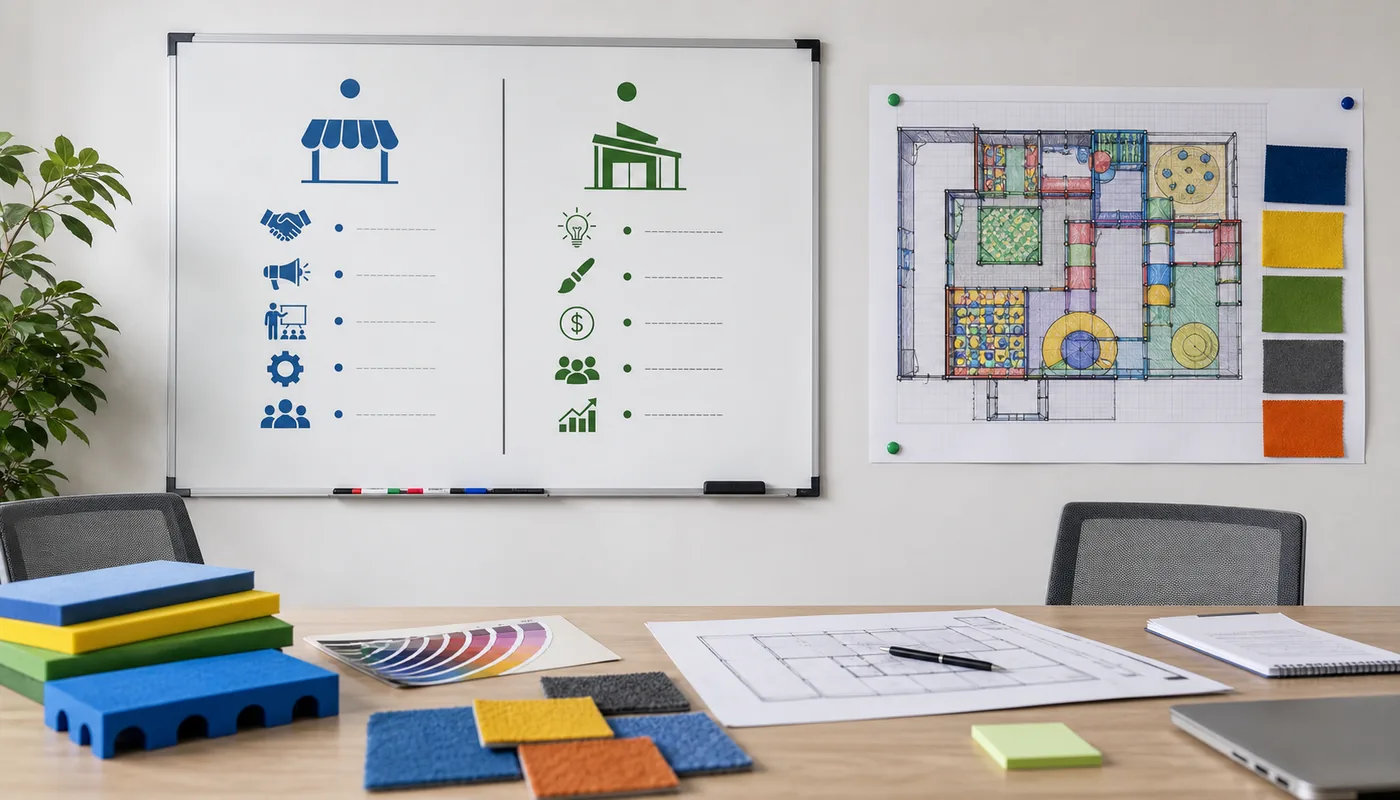
The two paths can both lead to a commercial indoor playground, but they change different parts of the project. A useful comparison looks beyond the initial franchise fee or the first equipment quotation.
| Criteria | Franchise indoor playground | Independent indoor playground |
|---|---|---|
| Brand recognition | May start with a known concept or brand package | Must build trust locally from the beginning |
| Training and procedures | Often included or required by the franchisor | Must be written, hired, trained, and improved by the owner |
| Creative control | Limited by brand standards and agreement terms | Stronger control over layout, theme, offers, and experience |
| Supplier choice | May be tied to required or approved vendors | More freedom to compare equipment manufacturers and support scope |
| Cost structure | May include franchise fee, royalties, advertising fees, required vendors, and required systems | May avoid franchise fees and royalties, but still needs design, equipment, staff, marketing, software, insurance, and working capital |
| Speed to launch | Can be faster if the system is proven and support is strong | Depends on owner planning, site readiness, suppliers, and local approvals |
| Local market fit | Brand may help, but the format still needs local demand | Can be tailored tightly to local ages, culture, pricing, and competition |
| Exit and expansion | Controlled by contract, territory, renewal, and transfer terms | Controlled by owner strategy, buyer interest, and local business performance |
The FTC's franchise-buying guidance frames franchise ownership around defined costs, franchisor controls, and contractual obligations; see References. That is why a franchise comparison should not stop at brand support. It should also cover the agreement, required purchases, territory rights, renewal terms, and exit path.
What a Franchise Indoor Playground Can Give You
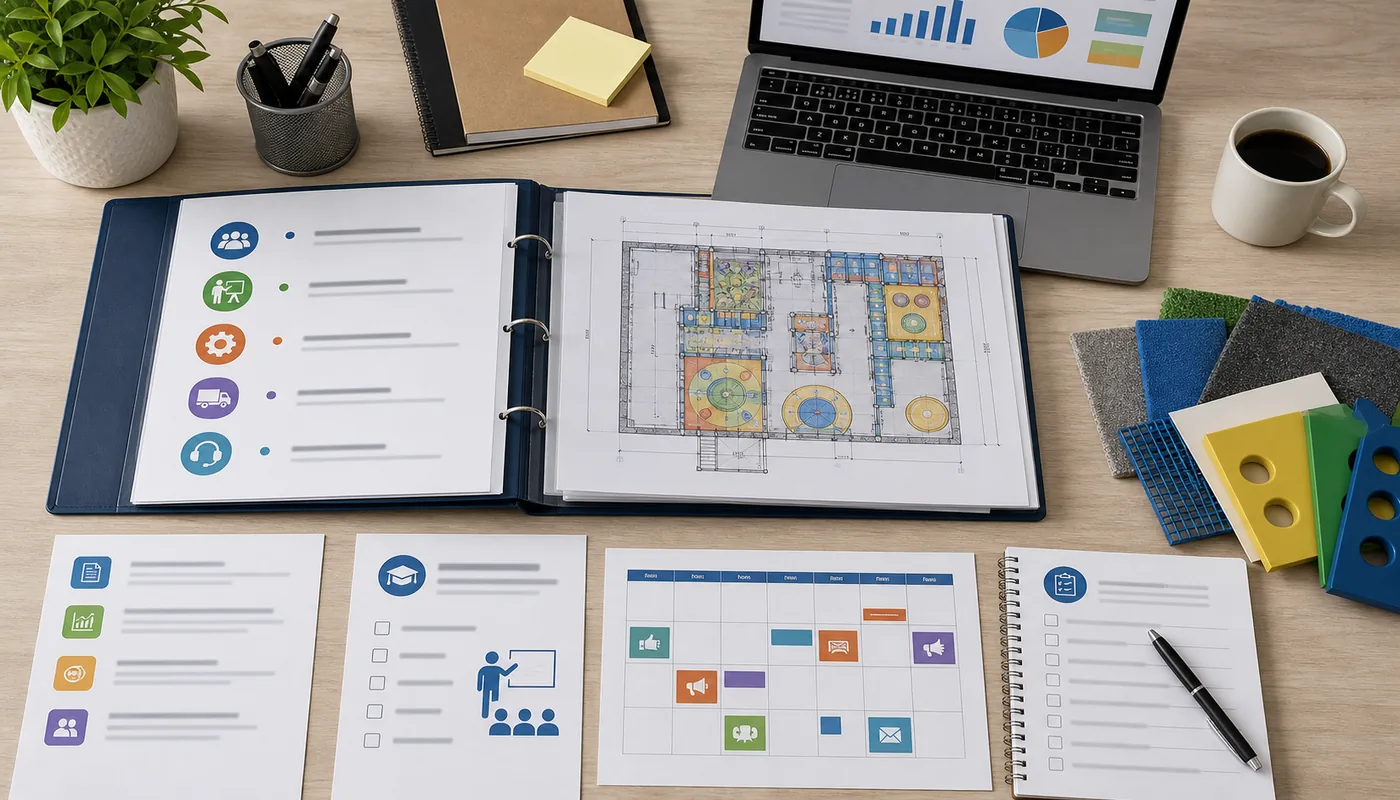
A franchise can reduce some of the blank-page work. For a first-time operator, that can be valuable. You may receive an operating manual, staff training process, brand standards, opening checklist, marketing templates, vendor guidance, software requirements, and advice on site selection.
That support is not automatically equal across every franchise. Before you treat the brand as a shortcut, ask what is actually included, who provides it, how long support lasts, and whether the franchisor has recent locations similar to your market, building size, and target age groups.
Use this support-value checklist:
- What training is included before opening, and what is available after opening?
- Are site selection, floor plan review, party operations, cleaning routines, safety checks, and maintenance processes documented?
- Are suppliers required, recommended, or optional?
- Does the franchisor control equipment, layout, signage, color, attractions, menu, software, or pricing?
- What marketing support is national, and what must be handled locally?
- What happens if your local market needs a format that differs from the brand template?
Franchise support can be especially helpful when the owner lacks operational experience. It can be less attractive when the operator already has a strong local concept, a capable management team, or a need for custom design that the franchise system cannot easily support.
If you are already evaluating a franchised build and need to compare supplier requirements, the KidsSoftPlay manufacturer guide for franchise operators can support that next layer of review: manufacturer guide for franchise operators.
What an Independent Indoor Playground Gives You
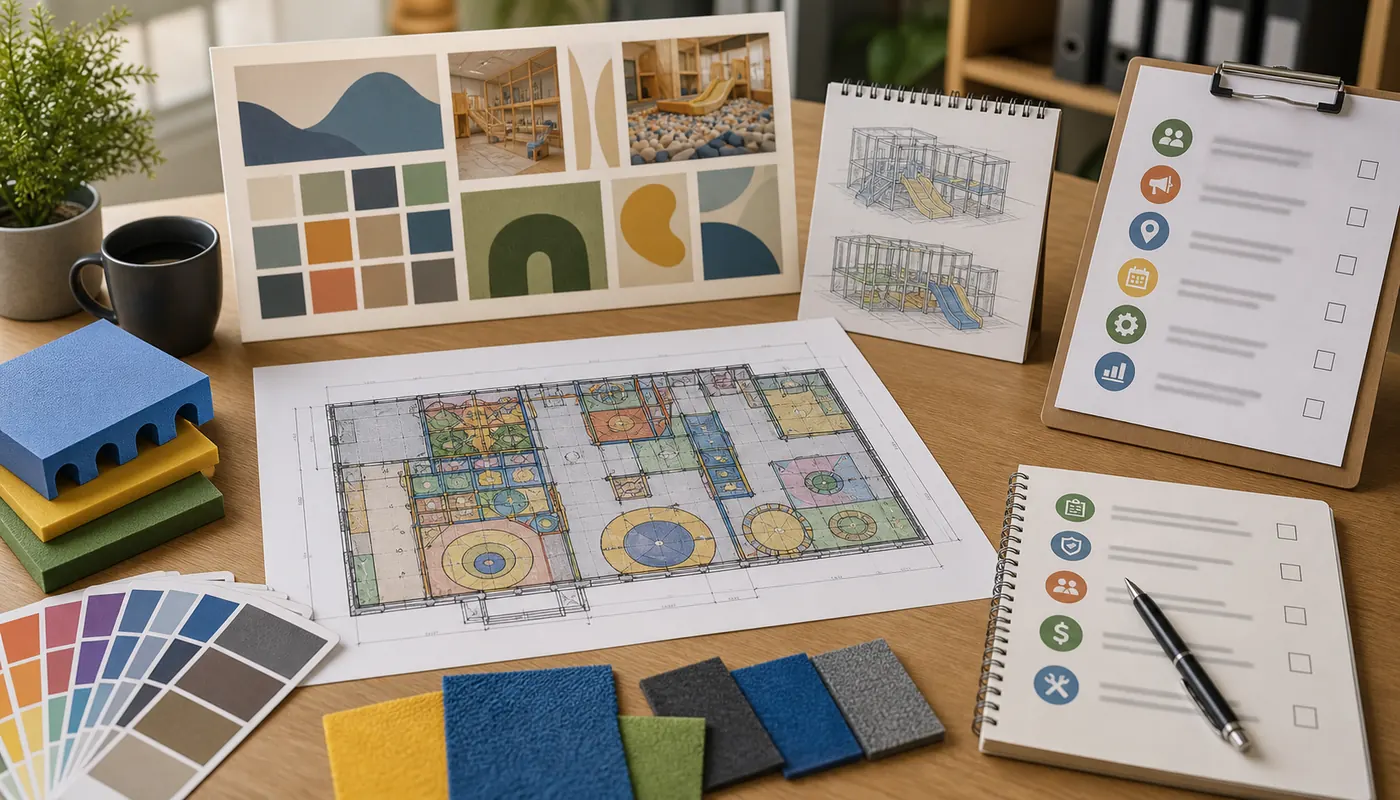
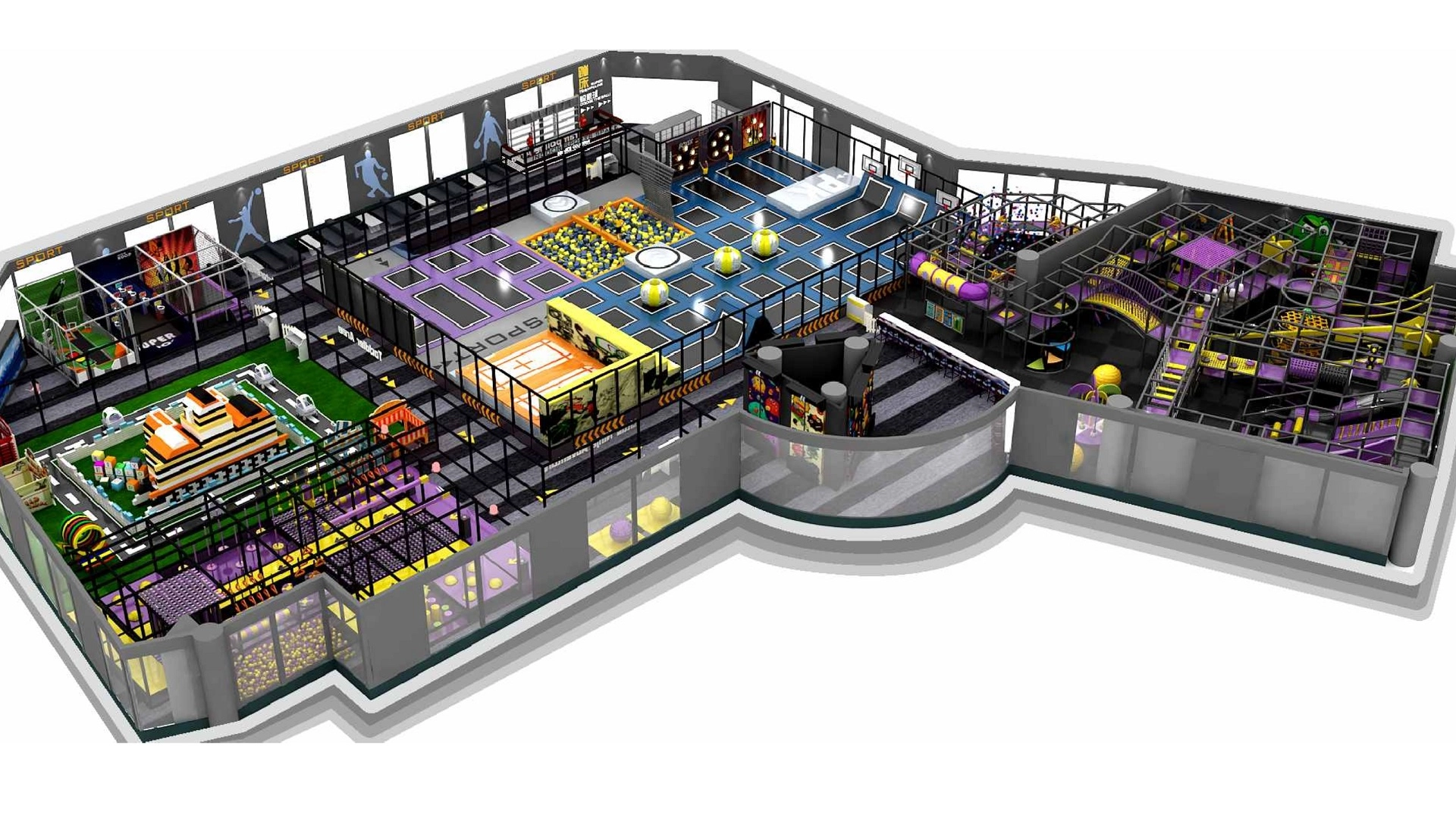
An independent indoor playground gives you more room to build around the local market. You can decide whether the venue should be a toddler soft play center, a party-led play cafe, a mixed-age indoor playground, a family entertainment center, or a themed custom destination.
That freedom matters because indoor playground demand is local. The right concept may depend on nearby families, schools, malls, weather, parking, birthday-party habits, food-service expectations, rent levels, competition, and the ages you want to serve. Independent ownership lets you adapt the concept before the layout is fixed.
The tradeoff is that you must build the missing systems. A franchise may hand you a starting structure; an independent owner must create one.
Use this readiness checklist before choosing the independent path:
- Can you define the target age groups and the experience you want parents to remember?
- Do you have a realistic startup budget and early-month cash plan?
- Can you build staff training, cleaning, inspection, incident documentation, and maintenance routines?
- Can you market the venue locally without relying on a national brand?
- Can you compare suppliers on the same scope instead of choosing only the lowest quote?
- Do you have advisors for lease review, insurance, local approvals, and business planning?
Independent ownership is not a DIY equipment project. It is a business model that requires a clear concept, a suitable site, operating systems, and a supplier scope that matches the venue. For the equipment side of that decision, review commercial indoor playground equipment only after the business model and site assumptions are clear.
Compare the Real Cost Stack Before You Decide
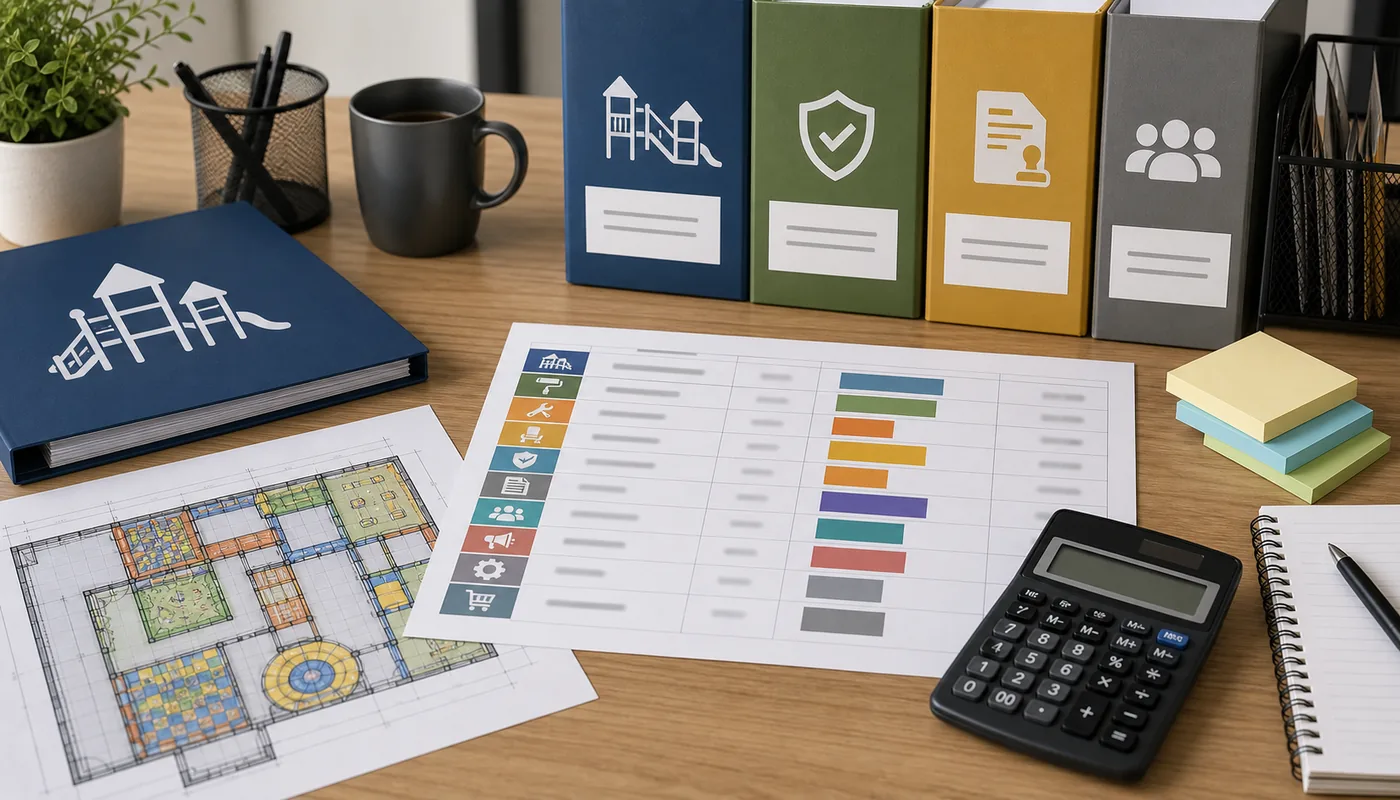
The biggest budgeting mistake is comparing a franchise fee with an equipment quote. Those are not the same thing. A franchise fee may buy access to a brand and system, while an equipment quote may cover only a defined equipment scope. Neither number is the full cost to open and operate.
The SBA startup-cost guidance recommends estimating expenses before launch and considering categories such as space, equipment, supplies, utilities, licenses, insurance, salaries, advertising, marketing, and market research; see References. For an indoor playground, those categories need to be translated into a venue-specific cost stack.
| Cost category | Franchise path | Independent path | Questions to ask |
|---|---|---|---|
| Brand and access fees | Initial franchise fee or similar required payment may apply | Usually none, unless licensing another concept | What does the fee include and exclude? |
| Ongoing payments | Royalties, advertising funds, required software, or system fees may apply | Owner keeps more revenue control but funds all systems directly | Are fees based on gross revenue, profit, or fixed amounts? |
| Equipment and attractions | May require approved packages or vendors | Owner compares suppliers and custom scope | Is freight, installation, drawings, spare parts, and documentation included? |
| Site and build-out | Brand standards may require specific finishes or layouts | Owner controls design but must coordinate local contractors | Who handles walls, flooring, HVAC, fire review, signage, and utilities? |
| Operations | Training and manuals may be included | Owner must build training, staffing, cleaning, inspection, and maintenance systems | What procedures are ready before opening? |
| Marketing | Brand campaigns may help, but local marketing still matters | Owner funds and runs local marketing directly | What is national support versus local execution? |
| Compliance and insurance | Brand may provide guidance, not a local guarantee | Owner must coordinate advisors and local approvals | Which permits, inspections, insurance, and accessibility reviews apply locally? |
| Working capital | Required reserves may be specified | Owner sets reserves based on conservative assumptions | How many slow months can the budget survive? |
This is why the article should not invent a universal answer to "Which is cheaper?" A franchise may cost more in fees but reduce some setup uncertainty. An independent build may avoid royalties but require more owner-led planning. The practical comparison is total opening budget plus ongoing obligations, not one headline number.
For a broader startup sequence, use the related KidsSoftPlay indoor playground startup guide.
Review the Contract, FDD, Territory, and Local Requirements
If you are reviewing a U.S. franchise opportunity, the FTC Franchise Rule requires franchisors to provide a disclosure document containing 23 specific information items about the offered franchise, its officers, and other franchisees; see References. FTC franchise-buying guidance also explains that prospective franchisees should use the disclosure document to investigate and evaluate the opportunity before investing.
The FTC's consumer guidance says a prospective franchisee must receive the Franchise Disclosure Document at least 14 calendar days before signing a binding agreement or paying money to the franchisor or an affiliate; see References. Readers outside the United States should check the franchise, licensing, and disclosure rules in their own jurisdiction.
Use this review checklist with a franchise attorney, accountant, and local advisors:
- What is included in the initial fee, and what must be paid separately?
- What royalties, advertising fees, software fees, training fees, or renewal fees apply?
- Are payments due even during slow months or losses?
- What territory is protected, and what competition from the same brand is allowed?
- Are suppliers required, approved, or flexible?
- Can you source custom indoor playground equipment if the required package does not fit the site?
- What happens if the lease, permit, fire review, or build-out takes longer than expected?
- What renewal, transfer, default, termination, and exit terms apply?
- What local licenses, permits, insurance, accessibility, fire, food-service, tax, and employer requirements must be checked?
Local review matters whether you choose a franchise or independent model. The SBA licenses and permits guidance states that requirements and fees vary by business activity, location, and government rules; see References. SBA insurance guidance also notes that some insurance may be legally required and that requirements vary by state; see References.
If the venue is in the United States, accessibility and workplace requirements may also affect planning. The U.S. Access Board's play area guidance covers accessible routes and play components, while OSHA's 29 CFR 1910.22 applies to walking-working surfaces for covered employers; see References. Those sources do not replace local professional review, but they show why a site and operating plan should be checked before the equipment order is finalized.
Check Supplier Fit: Required Vendor, Approved Vendor, or Custom Manufacturer
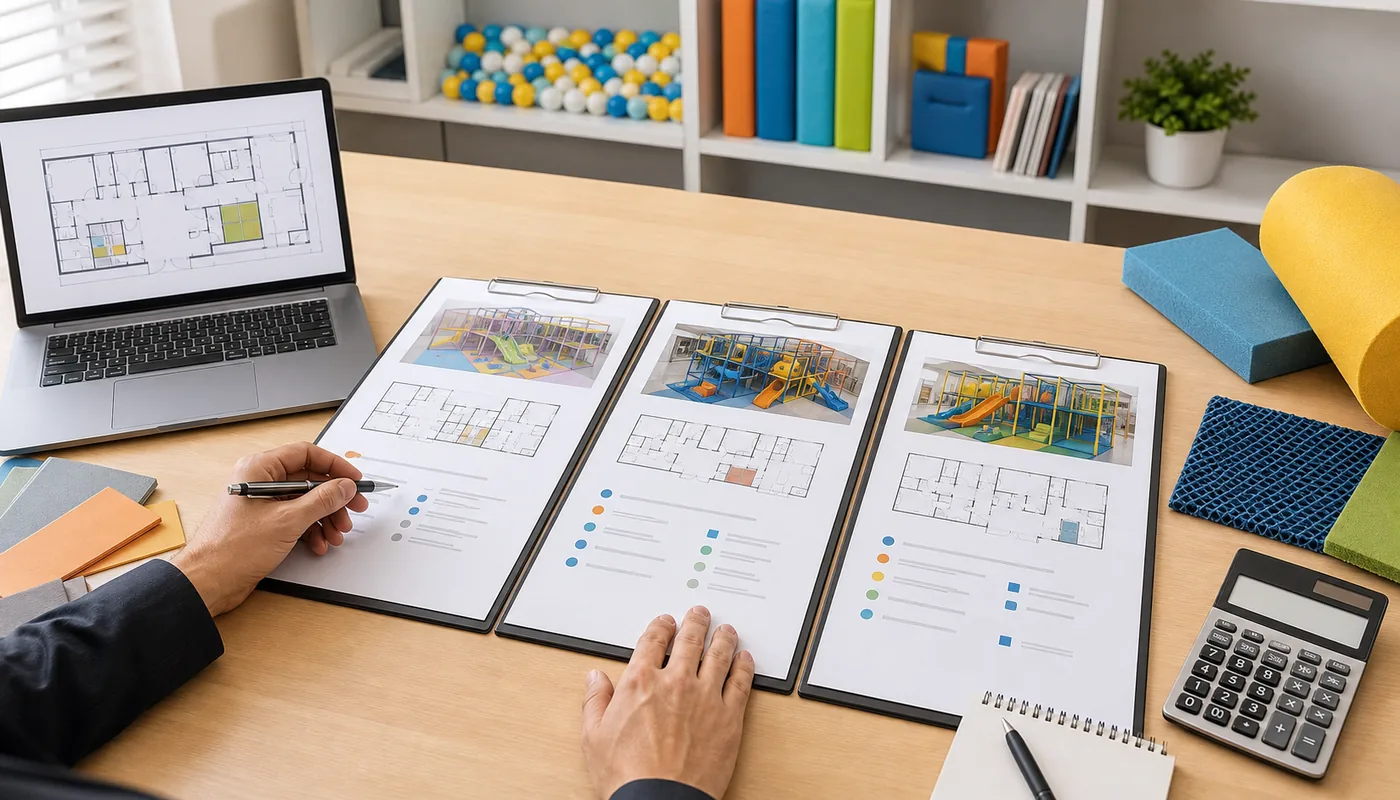
Supplier fit is one of the most practical differences between a franchise and an independent indoor playground. A franchise may require a specific supplier, a specific equipment package, or an approved vendor list. An independent owner usually has more freedom, but also more responsibility for comparing scope correctly.
Before asking for a final quotation, classify your supplier path:
| Supplier path | What it means | Best fit | Watchouts |
|---|---|---|---|
| Required vendor | Franchisor specifies the supplier, equipment package, or purchasing channel | Operators who value system consistency and contract clarity | Less flexibility if site dimensions, theme, or local demand differs from the template |
| Approved vendor list | Franchisor allows several approved suppliers | Operators who want brand approval plus some comparison ability | Confirm whether all vendors quote the same scope and documentation |
| Independent custom manufacturer | Owner chooses supplier, layout, theme, and equipment mix | Owners who need local adaptation, custom theming, or supplier flexibility | Owner must verify drawings, materials, freight, installation responsibility, documentation, spare parts, and after-sales support |
For independent buyers, the supplier conversation should be based on more than "How much per square meter?" A useful request includes floor area, clear height, columns, exits, target ages, desired attractions, party rooms, seating, budget boundary, local rules, installation plan, and opening timeline.
For franchise buyers, the supplier question is different. Ask whether the franchise agreement permits the supplier you want, whether substitution is possible, whether the franchisor reviews drawings, and whether local inspectors or insurers require documentation beyond the brand template.
FEI FAN / KidsSoftPlay presents equipment and project-support pathways through its project support services. Use that kind of supplier conversation after you know whether the project is franchise-controlled, approved-vendor-controlled, or independently sourced.
Use a Decision Matrix for Your Site, Budget, and Operating Team
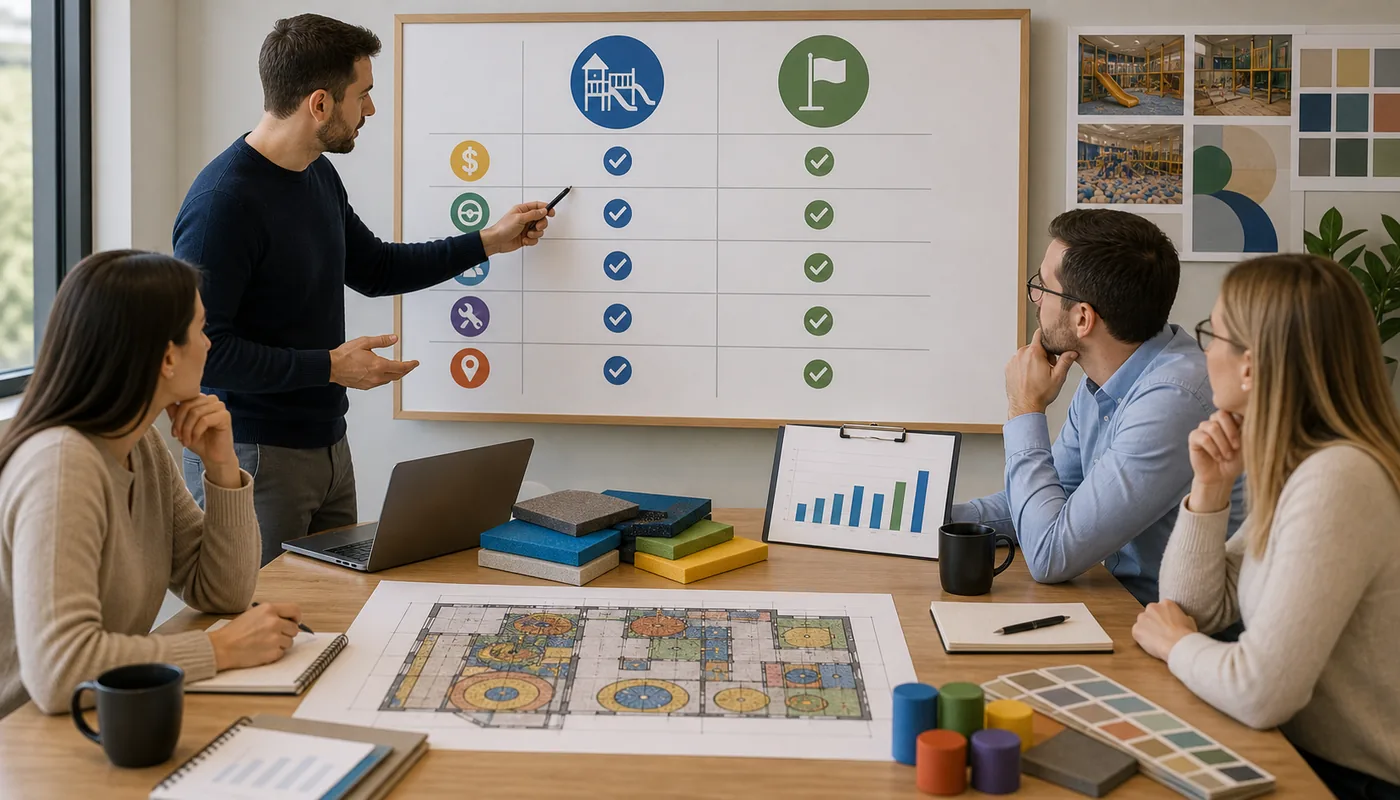
The best model is the one your project can execute. A franchise is not automatically safer. An independent build is not automatically cheaper. Score the model against your actual site, team, and risk tolerance.
| Decision factor | Franchise may fit better when... | Independent may fit better when... |
|---|---|---|
| Operating experience | You need training, manuals, templates, and opening support | You have operators, advisors, or partners who can build systems |
| Brand need | The market values the franchise name and the brand has relevant local pull | Local relationships, theme, location, and service can build trust |
| Creative control | You accept brand standards and a repeatable format | You need custom theming, attraction mix, pricing, or local adaptation |
| Supplier flexibility | Required or approved suppliers fit the site and budget | You need to compare multiple manufacturers or customize equipment |
| Budget tolerance | Fees and royalties are acceptable for the support received | You prefer to invest more directly in site, equipment, marketing, and systems |
| Contract comfort | You understand the agreement and accept renewal, territory, transfer, and exit terms | You want fewer brand-contract constraints and can manage more unknowns |
| Local approval path | Brand documentation helps, and local reviewers accept the format | Your building or jurisdiction needs custom review and local adaptation |
Use a simple scoring method: rate each factor from 1 to 5 for both models, then write down why. If the franchise score is high only because of brand comfort, review the contract and cost stack again. If the independent score is high only because it avoids fees, review the workload and marketing plan again.
The SBA business-plan guidance treats a business plan as a tool for structuring, running, and growing the business and for communicating with lenders or investors; see References. For this decision, the business plan should test both models against the same assumptions: capacity, pricing, party demand, staffing, rent, insurance, maintenance, financing, and local marketing.
Final Decision: Choose the Model Before You Price the Playground
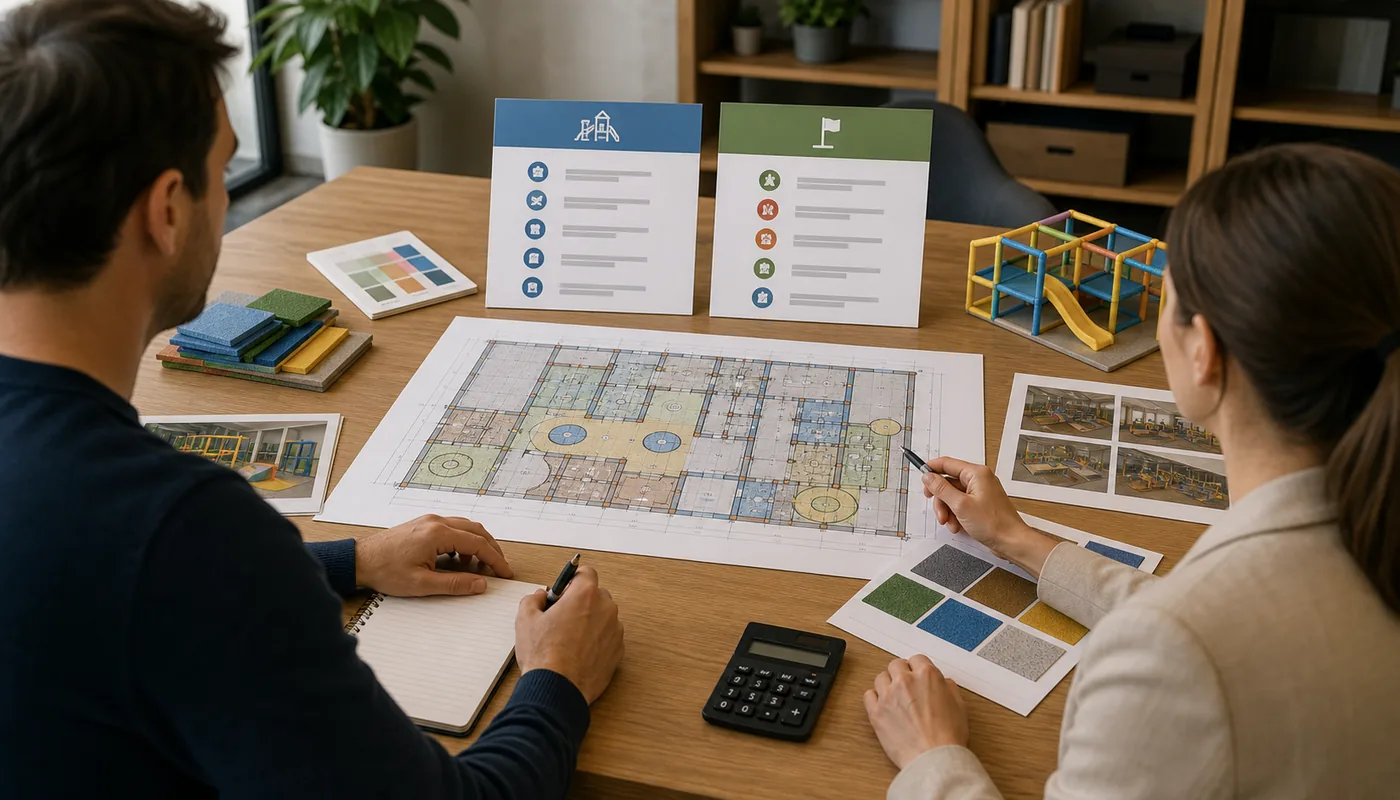
The right indoor playground model is the one that fits your real constraints. Choose a franchise if the brand system, training, procedures, and support are worth the fees, controls, supplier rules, and contract obligations. Choose an independent build if you need more creative control, supplier flexibility, and local adaptation, and you are ready to build the missing operating systems yourself.
Before requesting a final equipment quote, confirm the model, site, target ages, attraction mix, local review path, budget boundary, and opening timeline. That gives suppliers and advisors a project they can actually evaluate.
References & Sources
- Business Guide - U.S. Small Business Administration; used for franchise-control framing, startup cost categories, business-plan context, permits, and insurance planning.
- Franchise Rule - Federal Trade Commission; used for the U.S. franchise disclosure framework and the 23-item disclosure-document requirement.
- A Consumer's Guide to Buying a Franchise - Federal Trade Commission; used for franchise costs, controls, contractual obligations, royalties, and FDD timing guidance.
- Chapter 10: Play Areas - U.S. Access Board; used for U.S. play-area accessibility planning context.
- 1910.22 General requirements - Occupational Safety and Health Administration; used for U.S. walking-working surface maintenance context for covered employers.
Discuss Your Indoor Playground Project With FEI FAN
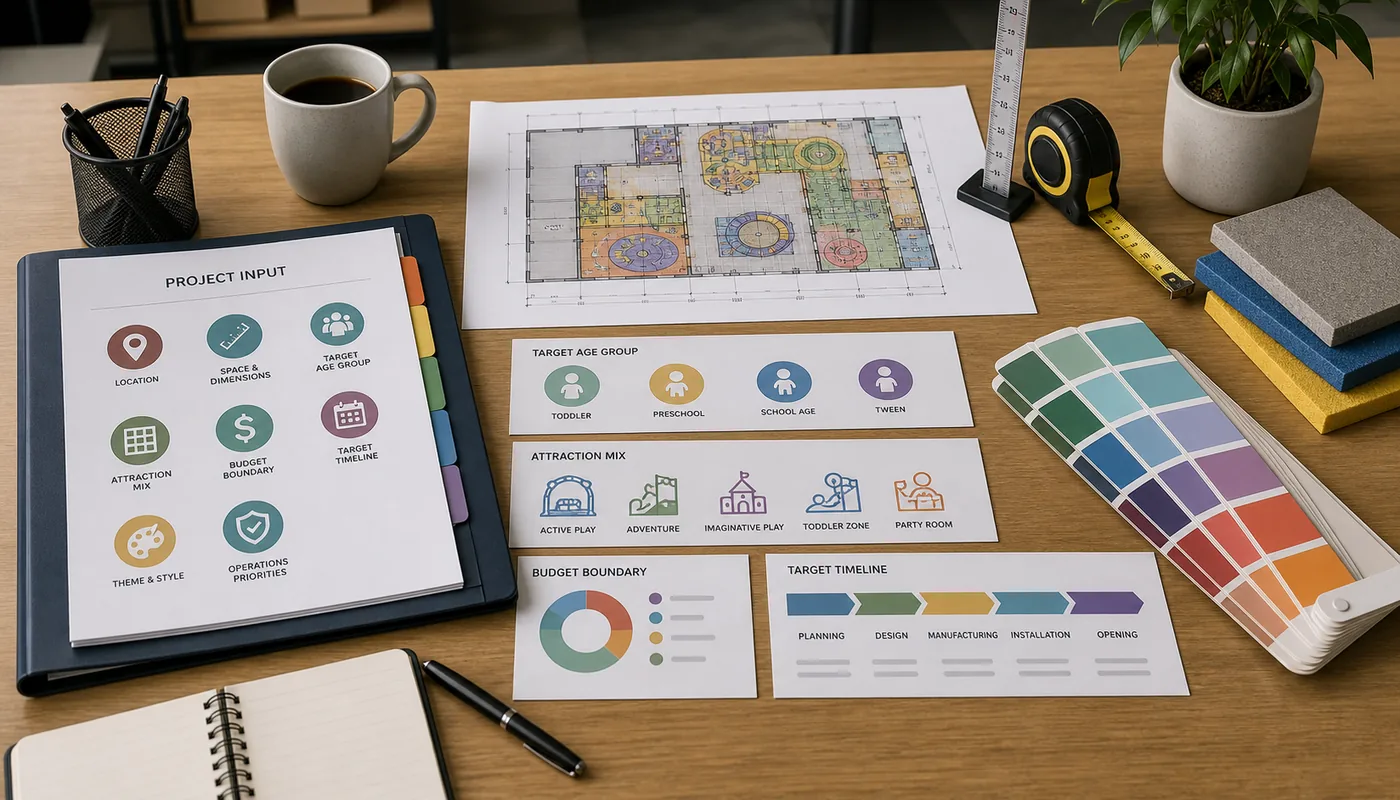
If you are comparing a franchise-controlled build with an independent indoor playground, prepare your project inputs before asking for a final quote: floor area, ceiling height, target age groups, preferred attractions, site location, business model, budget boundary, local review status, and opening timeline.
FEI FAN can discuss equipment scope, layout direction, and quotation inputs for commercial indoor playground projects. Send your project details through the KidsSoftPlay contact page or review the service pathway on the FEI FAN project support page.


 Scan QR Code
Indoor Soft Playground
Whatsapp: +8619068970573
Scan QR Code