Best indoor trampoline designs for custom playgrounds
Transforming Play: The Role of Trampolines in Modern Indoor Playgrounds
Indoor trampolines have become a cornerstone of contemporary custom playground design—combining joyful movement, social play, and fitness benefits for children and families. This article dissects the most effective indoor trampoline designs for custom playgrounds, focusing on safety, target user groups, spatial planning, and operational considerations. If you plan to design, upgrade, or buy an indoor trampoline solution, this guide provides actionable, evidence-backed recommendations to help you choose the right design and avoid common pitfalls.
Understanding why an indoor trampoline matters for custom playground ROI
An indoor trampoline is not just a play element; it’s a driver of dwell time, repeat visits, and ancillary revenue (food, parties, classes). Operators and designers should therefore weigh visitor experience, throughput, and maintenance when selecting a trampoline type. According to industry analyses, trampoline parks and indoor play centers consistently show higher average revenues per visit than static play areas because of extended stay and repeatable attractions (see Statista market overview in References).
Key user-centered objectives when specifying an indoor trampoline
- Age-appropriate engagement: Provide graduated challenge levels for toddlers, school-age children, and teens.
- Safety and supervision: Design lines of sight for staff and parents; ensure safe fall zones and netting.
- Durability and serviceability: Choose materials and modular systems that allow quick replacement of high-wear components.
- Operational throughput: Plan lane widths and jump surface counts to maximize safe simultaneous users.
Top indoor trampoline designs for custom playgrounds: features and best uses
Below are the most popular indoor trampoline design concepts, with practical notes on best-use scenarios and safety considerations. Each design is suitable for different business models—from family entertainment centers (FECs) to specialized trampoline gyms and mixed indoor playgrounds.
1. Open flat-bed trampolines (multi-bay banks)
Open flat-bed trampolines consist of contiguous trampoline mats arranged in multiple bays. They are ideal for free-jump areas and general family play. Advantages include high throughput and easier supervision. Risks include collisions; therefore, zoning and staff-to-user ratios are essential. Use padded frames and angled safety pads. Consider segmenting with low nets or foam boundaries for younger users.
2. Trampoline pits and foam pits
Trampoline-to-foam pits combine a run-up trampoline with a pit filled with foam cubes. These are excellent for teaching flips and safe landings. They require deeper pits, specific foam quality to maintain shock absorption, and regular cube hygiene protocols. Pits reduce direct impact injuries when used correctly but still require trained spotting staff for complex maneuvers.
3. Wall-trampoline zones (vertical trampolines)
Wall-trampoline designs extend jumping surfaces up the walls, enabling wall-walks and angled bounce experiences. They increase the “play envelope” without expanding floor footprint. Important: install angled transition padding and limit vertical height for younger age groups. Use specific mat materials with certification for vertical loads.
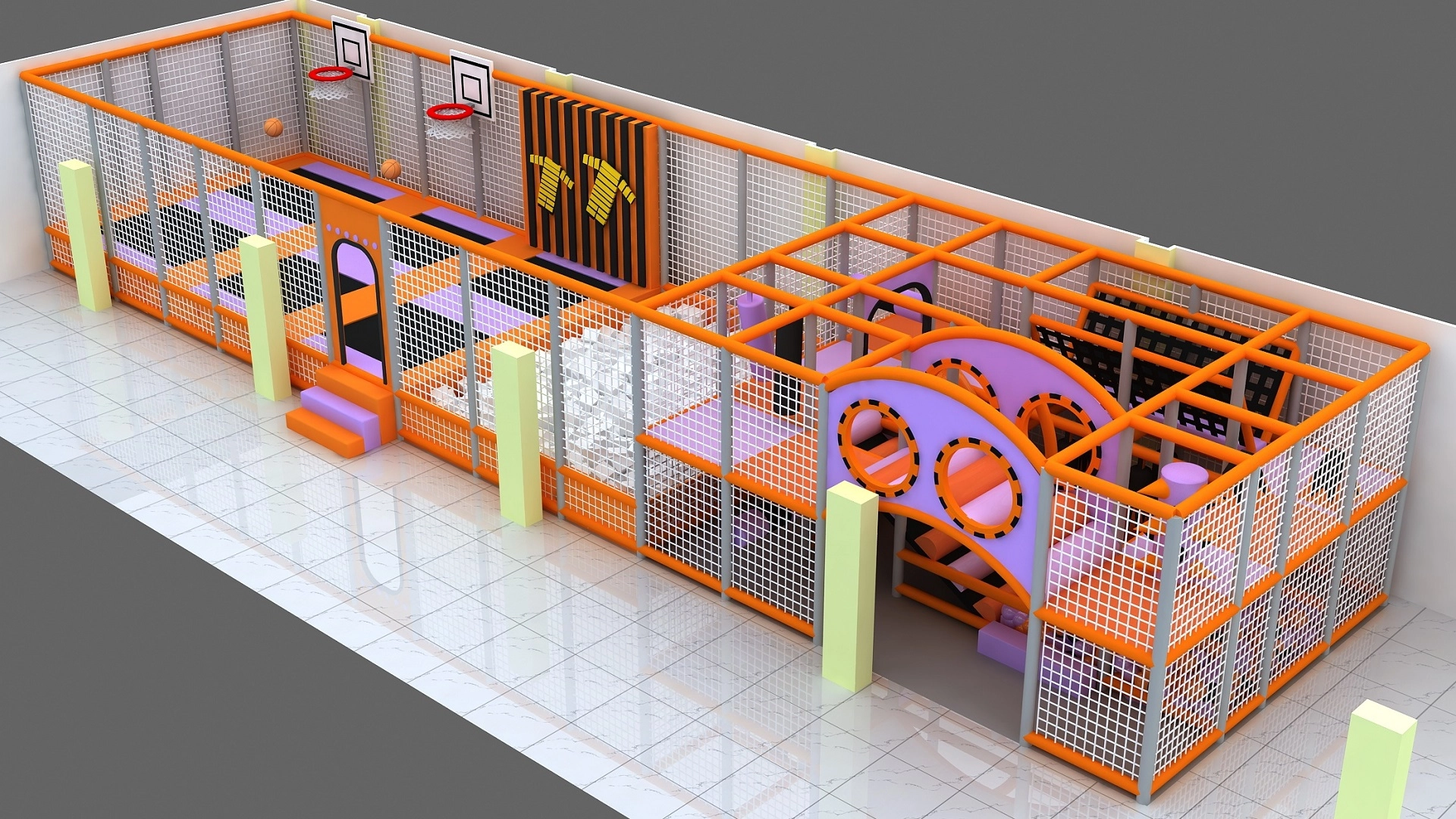
4. Trampoline arenas with court formats (slam-dunk & dodgeball)
Designs that replicate court sports (basketball dunk lanes, dodgeball courts) provide structured activities and event programming potential. Courts support group bookings and classes, boosting monetization. These require clear rule signage, staff-led sessions, and durable netting to separate courts.
5. Soft-edge and recessed trampolines
Soft-edge trampolines have foam-encased frames and reduced hard-edge exposure. Recessed trampolines sit slightly lower than surrounding flooring to reduce fall height. Both designs are popular in family-oriented custom playgrounds where minimizing injury risk is a priority. Recessed designs often cost more due to floorwork, but they simplify supervision and reduce the need for deep peripheral padding.
Comparing indoor trampoline designs: safety, footprint, and cost
Use the table below to compare common indoor trampoline designs at a glance. Cost ranges are indicative—actual costs vary by region, materials, and custom features. Sources for safety guidance are cited in the References.
| Design | Best For | Primary Safety Features | Typical Footprint (m²) | Indicative Cost Range (USD) |
|---|---|---|---|---|
| Open flat-bed banks | Family play, high throughput | Continuous padding, perimeter nets, staff supervision | 50–300 | 15,000–150,000 |
| Trampoline + foam pit | Skill training, classes | Deep pit, foam cube quality control, trained spotters | 30–120 | 20,000–120,000 |
| Wall trampolines | Space-efficient thrill areas | Angled padding, reinforced mounts, limited heights | 40–200 | 25,000–130,000 |
| Court formats (dodgeball/dunk) | Events, parties, team play | High nets, court separation, protective padding | 60–350 | 30,000–250,000 |
| Soft-edge / recessed | Family centers, toddler-friendly | Reduced fall heights, integrated flooring, foam edges | 40–220 | 40,000–200,000 |
Notes: Cost ranges include equipment, basic installation, and padding but exclude large-scale structural work, professional certification, and local permitting fees. For accurate budgeting, obtain itemized quotes from manufacturers and installers.
Materials, manufacturing standards, and testing for indoor trampoline safety
Choosing the right materials and insisting on third-party testing is essential. Look for:
- UV-stable, tear-resistant jumping mats (polypropylene or similar technical fabrics) with reinforced stitch patterns.
- High-density closed-cell foam for edge pads and pit cubes to reduce compression set and microbial growth.
- Powder-coated or galvanized steel frames with corrosion resistance for longevity, especially in humid climates.
- Netting rated to resist tears and abrasion, with small mesh to prevent entrapment.
Standards and guidance: the U.S. Consumer Product Safety Commission (CPSC) and professional associations such as IPEMA provide safety recommendations. For trampoline parks specifically, operators often follow industry best practices informed by ASTM/IPEMA guidance and local code requirements (see References for authoritative links).
Operational best practices when running an indoor trampoline area
Design is only part of the equation. Successful, safe trampoline operations require policies and staff systems:
- Age and skill zoning: schedule separate jump sessions for toddlers, children, and teens to reduce collision risk.
- Staff training: certified first-aid and spotting training for instructors; clear incident response plans.
- Capacity control: limit users per bay based on manufacturer recommendations and maintain visible occupancy counters.
- Maintenance schedule: daily inspections for mat tension, frame integrity, and pad wear; quarterly deep checks for hardware torque.
- Hygiene: foam cubes and padding should be cleaned with manufacturer-approved disinfectants and replaced on schedule to avoid degradation.
How to incorporate indoor trampoline design into a custom playground masterplan
Follow a phased approach:
- Define target audience and revenue model (open play, membership, structured classes, parties).
- Map customer flow—entrance, check-in, lockers, viewing areas, food & retail, and emergency egress.
- Choose trampoline zones by intensity and supervision needs; position noisy/high-energy zones away from quiet family areas.
- Consult an experienced manufacturer and structural engineer early—floor loading, ceiling heights, and fire exits must be confirmed before committing to designs.
Why choose a professional manufacturer: the FEI FAN advantage
Guangzhou Feifan Amusement Equipment Co., Ltd. was established in 2017. We are a comprehensive indoor playground equipment manufacturer that integrates design, research and development, production, sales, and service. And we have a modern factory building of 6400m² and a 5800 m² office building. Our company's main products include indoor playgrounds, trampoline park equipment, and outdoor amusement equipment. We are committed to creating high-end indoor and outdoor children's amusement equipment and enjoy a high reputation both at home and abroad. We look forward to working together with customers to create a better childhood!
FEI FAN is committed to becoming a global leader in the children's play equipment industry, with a core belief in creating joyful, safe, and imaginative spaces for every child. Through professional design, high-quality manufacturing, and fully customized services, we deliver efficient, one-stop indoor playground solutions for clients around the world. We are not just manufacturers—we are creators of joyful experiences, enablers of parent-child interaction, and companions in child development.
FEI FAN strengths and product focus
FEI FAN’s competitive advantages include:
- Integrated design-to-manufacture capability: in-house R&D and production reduce lead times and improve quality control.
- Large modern facilities (6400 m² factory, 5800 m² offices) that support scalable custom projects.
- Product breadth: indoor playgrounds, trampoline park equipment, and themed indoor parks—allowing turnkey solutions.
- Emphasis on safety and material quality consistent with international market expectations.
These strengths make FEI FAN a viable partner for clients who want tailored indoor trampoline solutions—whether you need a family-friendly soft-edge play area or a full-scale trampoline park with courts and skill zones.
Budgeting and lifecycle costs for indoor trampoline installations
Beyond upfront equipment and installation, consider lifecycle costs when comparing suppliers:
- Regular maintenance and spare parts (mats, springs, padding)
- Cleaning and foam cube replacement schedules
- Insurance and certification renewals
- Seasonal promotional expenses and staff training
Operators who track lifecycle costs often find that investing in higher-quality materials and reputable manufacturers reduces downtime and total cost of ownership over 5–10 years.
Case examples and practical layout tips
Design tip: combine a soft-edge toddler trampoline area adjacent to a viewing café so parents can supervise comfortably. For multi-zone parks, position foam pits and trick-training lanes near locker rooms to manage footwear and reduce floor contamination.
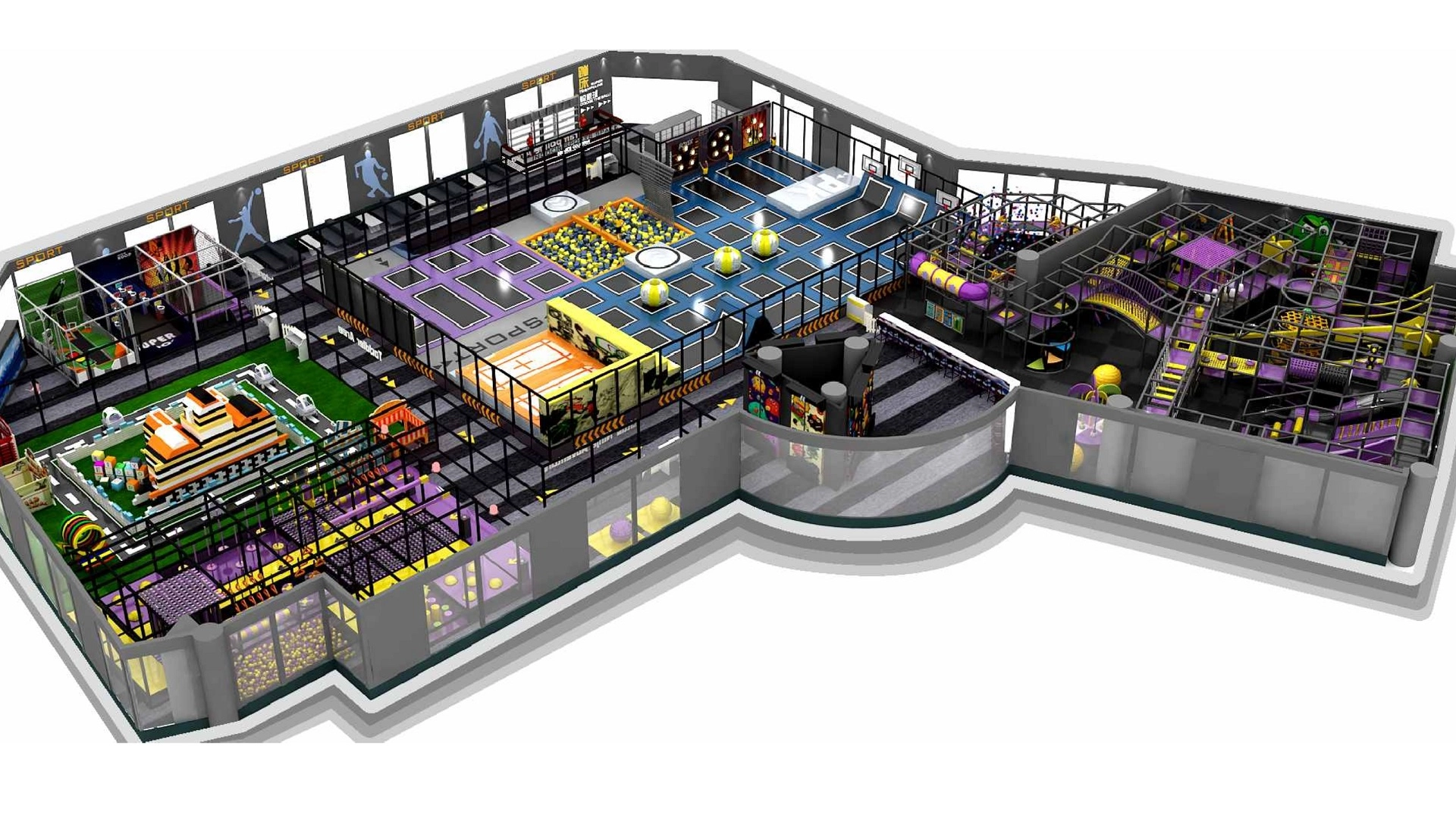
Case example: a 600 m² family entertainment center may allocate 25–35% of its area to trampoline attractions (mixed open banks, courts, and a pit). This mix balances high-revenue attractions with quieter play zones for younger children.
Regulation, certification and evidence-based safety guidance for indoor trampoline operators
Regulatory expectations vary by jurisdiction. Operators should consult local building codes and liability requirements and follow industry guidance including CPSC recommendations and IPEMA/ASTM-based best practices. Regular third-party inspections can reduce legal risk and improve public trust.
Frequently Asked Questions (FAQs)
1. What is the safest type of indoor trampoline for young children?
Soft-edge or recessed trampolines with low fall heights are generally safest for toddlers. Age-segregated sessions and padded surroundings further reduce risk.
2. How much space do I need for a small commercial indoor trampoline area?
A compact, efficient layout for a small commercial area begins around 50 m² for a single-zone open bank or small court. For multi-zone parks, plan 200–600 m² depending on desired attractions and throughput.
3. How often should trampoline mats and foam cubes be replaced?
Replace foam cubes according to manufacturer recommendations (commonly every 2–5 years depending on use and cleaning). Mat replacement frequency depends on usage intensity; inspect mats monthly and plan for replacement every 3–7 years for commercial operations.
4. Are there standards I should require from a manufacturer?
Request documented material specifications, third-party testing where available, and references from completed projects. Follow local code and consult industry guidance from CPSC and IPEMA.
5. Can trampoline areas be insured commercially?
Yes—most insurers offer commercial liability policies covering indoor playgrounds and trampoline parks. High Qualitys depend on safety programs, inspection records, and staff training levels.
6. What staffing ratios are recommended for trampoline zones?
Staffing guidelines vary by design and local regulation; many operators use 1 staff per 10–25 jumpers for open banks and higher ratios near foam pits or court events. Always align staffing with manufacturer safety recommendations.
7. How can I measure ROI for a trampoline addition?
Track metrics such as visits per day, average ticket spend, ancillary sales, party bookings, and repeat customer rate. Compare incremental revenue against installation and operating costs to estimate payback period and lifetime value.
Contact & next steps
If you’re planning a custom indoor playground or trampoline park, contact Guangzhou Feifan Amusement Equipment Co., Ltd. for a consultation and detailed quote. Professional designers can produce CAD layouts, material specifications, and phased implementation plans tailored to your market and budget. Reach out to discuss feasibility, safety certification, and turnkey installation options.
References
- Statista — Trampoline parks: market overview and statistics. https://www.statista.com/topics/3139/trampoline-parks/ (accessed 2025-12-16).
- U.S. Consumer Product Safety Commission (CPSC) — Trampoline safety information. https://www.cpsc.gov/Safety-Education/Safety-Education-Centers/Trampolines (accessed 2025-12-16).
- International Play Equipment Manufacturers Association (IPEMA) — Playground equipment guidance. https://ipema.org/ (accessed 2025-12-16).
- Centers for Disease Control and Prevention (CDC) — Physical activity guidelines for children. https://www.cdc.gov/physicalactivity/basics/children/index.htm (accessed 2025-12-16).
- Industry case studies and manufacturer technical brochures — sample lifecycle and maintenance recommendations (manufacturer resources accessed 2025-12-16).
Indoor Play Equipment Buying Guide for Business Owners
Child Development Benefits of Indoor Playgrounds: Research-Based Insights
Space Planning for Indoor Playground Equipment
Designing a Custom Indoor Trampoline Playground
For Shipping
What is the shipping way of your products ?
The shipping way is mainly in sea freight, small products by express delivery and air .
OEM & ODM
Is installation included in your service?
We provide clear manuals, video guides, and can assist remotely or on-site.
For Products
How many square meters should we have to start an indoor playground ?
As usual,It is around in 50-500 square meters,For a large commercial center , it is about 500-2000 square meters.
Indoor Playgrounds Trampoline Parks
How do you ensure safety in trampoline parks?
Our equipment is designed with soft padding, safety nets, and international certifications, and we provide operational safety guidelines for daily use.
What is the minimum space required for an indoor playground or trampoline park?
Indoor playgrounds can start from 50–100 m², while trampoline parks generally require at least 300 m² for a functional layout.


Get in touch
Let’s Build Your Dream Indoor Playground Together
Thank you for your interest in our products and services!
We’re dedicated to providing you with the best possible support and solutions for your needs.
FEI FAN is a premier Indoor Playground Manufacturer specializing in Kids Soft Play Equipment. From design to installation, we provide one-stop solutions for indoor play centers, daycares, and commercial venues globally.
© 2025 Feifan Amusement Equipment. All Rights Reserved.
 Scan QR Code
Indoor Soft Playground
Whatsapp: +8619068970573
Scan QR Code