Lighting and Ventilation for Indoor Playgrounds
Designing Safe, Comfortable Indoor Play Spaces
Why lighting and ventilation matter for indoor playground equipment
Indoor playground equipment performance and the user experience depend heavily on environmental design. Proper lighting reduces trip/fall risk, supports visual development and creates inviting atmospheres; effective ventilation controls airborne contaminants, odors and humidity, reducing illness transmission and protecting play structure materials. Owners and designers of indoor playgrounds must balance safety, child development, energy use and operating costs when specifying lighting and ventilation.
Lighting fundamentals for indoor playground equipment
Lighting design for spaces with indoor playground equipment should address three core goals: visibility and safety, psychological comfort and durability/maintenance. Key performance metrics are illuminance (lux), uniformity ratios, Color Rendering Index (CRI), correlated color temperature (CCT), glare control and switching/controls strategy.
Recommended illuminance and quality levels
Below are practical illuminance targets commonly used in play spaces. Use these as design starting points; adjust for age group, activity type and local regulations.
| Space / Activity | Recommended Illuminance (lux) | Notes |
|---|---|---|
| General play area (open ball courts, soft play) | 150–300 lx | Focus on uniformity and low glare; avoid high contrast near climbing features |
| Task/interactive areas (reading corner, crafts) | 300–500 lx | Higher local lighting recommended for fine visual tasks |
| Ramps, stairs, entry/egress routes | 200–400 lx | Emphasize uniformity and anti-slip contrast marking |
| Reception, ticketing, food counters | 200–300 lx | Warm, welcoming light desirable |
| Bathrooms, changing rooms | 100–200 lx | Durable lighting fixtures with good IP rating |
Recommended quality targets: CRI >80 (CRI 90+ preferred for color-sensitive areas), CCT 3000–4000K for neutral to slightly warm feel (younger children often prefer warmer tones but balanced CCTs improve color perception). Use fixtures with low glare (UGR <16 where measurable) and ensure anti-reflective surfaces on equipment to avoid distracting hotspots.
Light sources, controls and daylight integration
LED is the preferred source for energy, long life and controllability. Use layered lighting: ambient (general), accent (feature highlighting), and task lighting. Integrate daylight where possible to improve wellbeing—use daylight sensors to dim artificial lighting—and employ zoning and occupancy sensors to reduce energy use in low-traffic hours. Avoid flicker and ensure dimmers and drivers are compatible with LED fixtures; flicker can trigger discomfort in sensitive children.
Ventilation principles for indoor playground equipment
Ventilation aims to supply fresh air, remove contaminants (CO2, VOCs, aerosols), control humidity and manage temperature. For spaces with indoor playground equipment—often high occupancy densities and high activity levels—ventilation design should prioritize adequate outdoor air, filtration, good air distribution and monitoring.
Key ventilation metrics and targets
- CO2: Keep steady-state levels below 1,000 ppm as an operational target; ideally <800 ppm during peak occupancy for better air quality.
- Outdoor air rate: Design guidance commonly suggests 5–10 L/s per person for child-occupied spaces, combined with area-based ventilation to address background contaminants.
- Air changes per hour (ACH): Aim for 4–6 ACH in active play areas; higher ACH (6–8) may be warranted in high-activity or high-occupancy venues or where infection-control is a priority.
- Filtration: Use MERV 13 or higher on HVAC recirculated air where systems can accommodate pressure drop; consider HEPA in localized recirculation units or isolation rooms.
These targets align with practical guidance from public health and HVAC bodies: ASHRAE guidance on ventilation rates, CDC/WHO recommendations to improve indoor air quality, and specific school/childcare ventilation guidance that can be adapted to play facilities.
Comparing ventilation strategies for indoor playground equipment
| Strategy | Typical Performance | Pros | Cons |
|---|---|---|---|
| Natural ventilation (windows/vents) | Variable ACH depending on opening area & wind | Low energy, simple to implement | Inconsistent, weather-dependent, may not meet filtration needs |
| Mechanical ventilation (central HVAC with OA) | Controlled ACH and OA rates; supports filtration | Reliable, can meet ASHRAE/CDC targets, integrates with HVAC controls | Higher capital & operating cost; needs proper commissioning |
| Hybrid ventilation + local air cleaners | Good control with added filtration (HEPA) | Flexible; localized high-filtration where needed | Requires coordinated controls and maintenance |
Filtration, monitoring and operational controls
Install filters with rated efficiency appropriate to the system: MERV 13 is widely recommended where compatible; HEPA is ideal for portable/zone units. Deploy CO2 sensors as a proxy for ventilation effectiveness—zone CO2 concentration trends are actionable during occupancy. Integrate HVAC controls for demand-controlled ventilation with safety limits (minimum OA flow). During peak seasons, control humidity (target 40–60%) to reduce mold risk and maintain comfort.
Integration: layout, equipment placement and airflows
Design the HVAC supply and return locations to avoid directly blowing high-velocity air onto play equipment where it could cause loose lightweight elements to move or create localized drafts that bother children. Place air returns near floor level in high-activity zones or use ceiling returns with well-distributed diffusers to achieve good mixing. When locating indoor playground equipment:
- Avoid placing sensitive interactive exhibits directly under supply diffusers that produce glare or high airflow.
- Keep ventilation intakes away from kitchens, restrooms and areas with strong odors.
- Ensure emergency egress routes and exit signs have appropriate emergency lighting independent of general lighting systems.
Maintenance, commissioning and indoor air quality verification
Good design must be matched by ongoing operations: filter change schedules, verification of outdoor air dampers, fan motor checks and periodic re-commissioning. Commission systems with occupancy scenarios to confirm ACH and CO2 performance. Use simple dashboards for CO2 and humidity to provide actionable alerts to facility managers. Keep lighting maintenance programs—LED lumen depreciation, driver checks and control reprogramming—on a regular schedule to maintain safety and visual quality.
Practical design examples (approximate sizing)
The following table gives ballpark HVAC and lighting provisions for two typical indoor playground sizes to illustrate how targets translate into equipment and energy considerations. These are example calculations—final design must be based on local codes, occupancy counts and detailed HVAC/lighting calculations.
| Feature | Small Play Area (~200 m²) | Medium Play Area (~500 m²) |
|---|---|---|
| Design occupancy (playtime peak) | 40 people (includes parents/staff) | 100 people |
| Outdoor air target (6 L/s per person) | 240 L/s (~864 m³/h) | 600 L/s (~2,160 m³/h) |
| ACH target (4–6 ACH) | 4 ACH ≈ 2,880 m³/h for 200 m² × 3 m height | 4 ACH ≈ 7,200 m³/h for 500 m² × 3 m height |
| Lighting (general) - average illuminance 250 lx | Approx. 50,000 lm total (LED fixtures sizing) | Approx. 125,000 lm total |
| Filtration recommendation | MERV 13 central; portable HEPA near snack/quiet zones | MERV 13 central; additional HEPA for high-density spots |
Note: these are conceptual figures to support early-stage planning. HVAC engineers should perform precise load and ventilation calculations tailored to climate, schedule and local code.
Regulatory and safety considerations
Always consult local building, mechanical and electrical codes. Emergency egress and illumination must comply with local life-safety codes (e.g., NFPA 101 Life Safety Code in many jurisdictions). Fire detection, smoke control and HVAC shutdown sequences should be coordinated with the local authority having jurisdiction. Liaise with certified playground safety inspectors for surfacing, clearances and equipment anchoring; environmental systems should not compromise required safety access or create hazards (e.g., exposed ducts within reach of climbing structures).
FEI FAN (Guangzhou Feifan) — integrated solutions for lighting and ventilation-ready indoor playground equipment
Guangzhou Feifan Amusement Equipment Co., Ltd. was established in 2017. We are a comprehensive indoor playground equipment manufacturer that integrates design, research and development, production, sales, and service. And we have a modern factory building of 6400m² and a 5800 m² office building. Our company's main products include indoor playgrounds, trampoline park equipment, and outdoor amusement equipment. We are committed to creating high-end indoor and outdoor children's amusement equipment and enjoy a high reputation both at home and abroad. We look forward to working together with customers to create a better childhood!
FEI FAN is committed to becoming a global leader in the children's play equipment industry, with a core belief in creating joyful, safe, and imaginative spaces for every child. Through professional design, high-quality manufacturing, and fully customized services, we deliver efficient, one-stop indoor playground solutions for clients around the world. We are not just manufacturers—we are creators of joyful experiences, enablers of parent-child interaction, and companions in child development.
How FEI FAN helps with lighting and ventilation integration
- Design coordination: FEI FAN integrates equipment design with HVAC and lighting planning to optimize diffuser locations, sightlines and fixture mounting points—minimizing glare and draft issues.
- Customized solutions: Tailored layouts for indoor playground, trampoline park and indoor theme park projects that incorporate lighting zones and ventilation access for maintenance.
- Turnkey delivery: From concept to factory-built modules (6400m² production capability), FEI FAN supports procurement, installation guidance and after-sales servicing.
- Quality assurance: Material selection and production controls that resist moisture and abrasion prolong system life and reduce interference with HVAC and lighting performance.
For operators seeking a partner able to deliver compliant, child-focused indoor playground environments with integrated environmental design, FEI FAN’s combination of manufacturing scale, design capabilities and international reputation is a clear differentiator.
Frequently Asked Questions (FAQ)
1. What illuminance should I specify for an indoor playground with mixed-age equipment?
Use 150–300 lux for general play areas and 300–500 lux for task/interactive areas. Emphasize uniformity and low glare; warmer CCTs (3000–4000K) and CRI >80 are recommended.
2. How much ventilation is required for indoor playground equipment areas?
A practical design target is 5–10 L/s per person combined with area-based ventilation; aim for 4–6 ACH in active play areas. Use CO2 monitoring to verify performance and increase ventilation or filtration if CO2 exceeds 1,000 ppm persistently.
3. Should I use MERV 13 or HEPA filtration in an indoor playground?
MERV 13 is recommended for centralized HVAC systems that can accept the pressure drop. Portable HEPA units are useful for targeted high-density zones or where central upgrades are impractical.
4. How do I avoid drafts and strong airflows around climbing structures?
Locate supply diffusers to provide gentle, well-distributed airflow rather than high-velocity jets. Use diffusers with wide throw or multiple smaller diffusers; avoid pointing supplies directly at climbing or suspended equipment.
5. Can daylighting be used safely with indoor playground equipment?
Yes—daylighting improves mood and reduces energy use, but it must be controlled to avoid glare and overheating. Use skylights with diffusing glazing, external shading and daylight sensors connected to the lighting control system.
6. How often should HVAC filters and lighting fixtures be maintained?
Filter change frequency depends on system loading but MERV 13 filters typically need inspection every 3 months and replacement every 3–12 months based on measured pressure drop. LED systems should be inspected annually; critical drivers and sensors tested per manufacturer guidance.
Contact & Next Steps
If you are planning an indoor playground project or retrofitting an existing facility, consult with FEI FAN for integrated equipment design that considers lighting and ventilation from the outset. Contact FEI FAN to request product catalogs, technical drawings and a customized proposal that aligns equipment layout with HVAC and lighting strategies to deliver safe, energy-efficient play environments.
References
- ASHRAE Standard 62.1—Ventilation for Acceptable Indoor Air Quality. ASHRAE. (See: https://www.ashrae.org/technical-resources/standards-and-guidelines/standards-addenda) — Accessed 2024-06
- Centers for Disease Control and Prevention (CDC), Ventilation in Buildings. https://www.cdc.gov/coronavirus/2019-ncov/community/ventilation. — Accessed 2024-06
- World Health Organization, Roadmap to Improve and Ensure Good Indoor Ventilation in the Context of COVID-19. https://www.who.int/publications/i/item/9789240021288 — Published 2021, accessed 2024-06
- Illuminating Engineering Society (IES) general guidance and lighting design resources. https://www.ies.org/ — Accessed 2024-06
- NFPA (National Fire Protection Association) Life Safety Code information. https://www.nfpa.org/ — Accessed 2024-06
Further technical assistance or customized calculations are available—reach out to FEI FAN or an accredited HVAC/lighting engineer to develop construction documents and commissioning plans tailored to your site and local code requirements.
Custom indoor trampolines for toddlers: safety tips
Best Materials Used by Indoor Playground Manufacturers
How to Market Your Indoor Playground Business Effectively: A Practical Guide
Benefits of Commercial Playground Equipment for Indoor Play
Indoor Playgrounds Trampoline Parks
How long does it take to complete a project?
Depending on project size, it typically takes 4–10 weeks from design to delivery and installation.
Can I upgrade or expand my playground/trampoline park in the future?
Absolutely. Our modular design allows you to expand or reconfigure easily to meet future business needs.
Shopping MallsRetail Centers
What safety standards do your products meet?
All our equipment complies with international safety certifications (EN, ASTM, CE, etc.) and uses eco-friendly, non-toxic materials.
Can we start with a small play zone and expand later?
Absolutely. Our modular design allows you to upgrade and expand easily as your mall grows.
OEM & ODM
How long is the the production time of customized themes?
It depends on the size and design of the projects , it takes about 15-45 days.
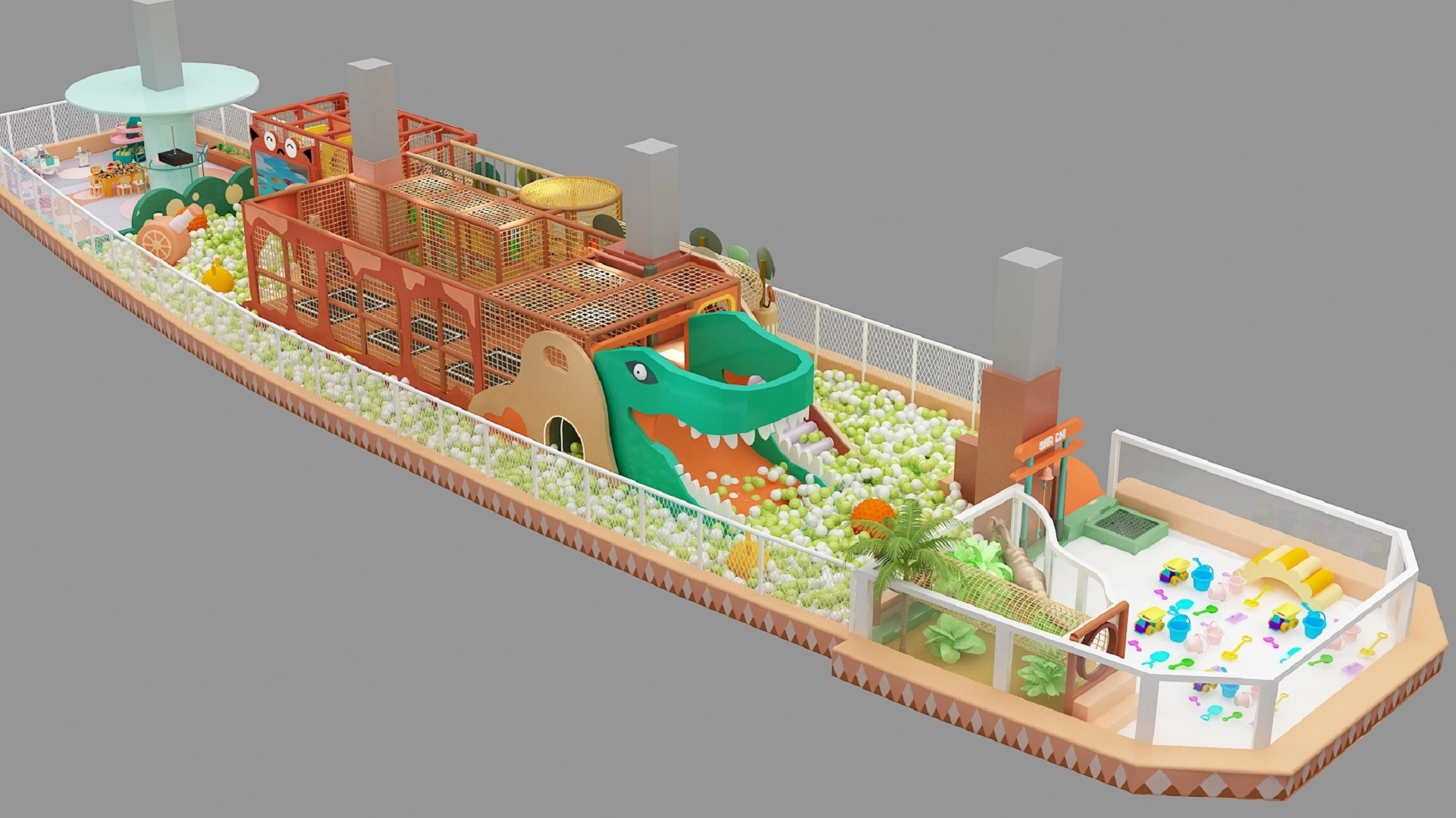
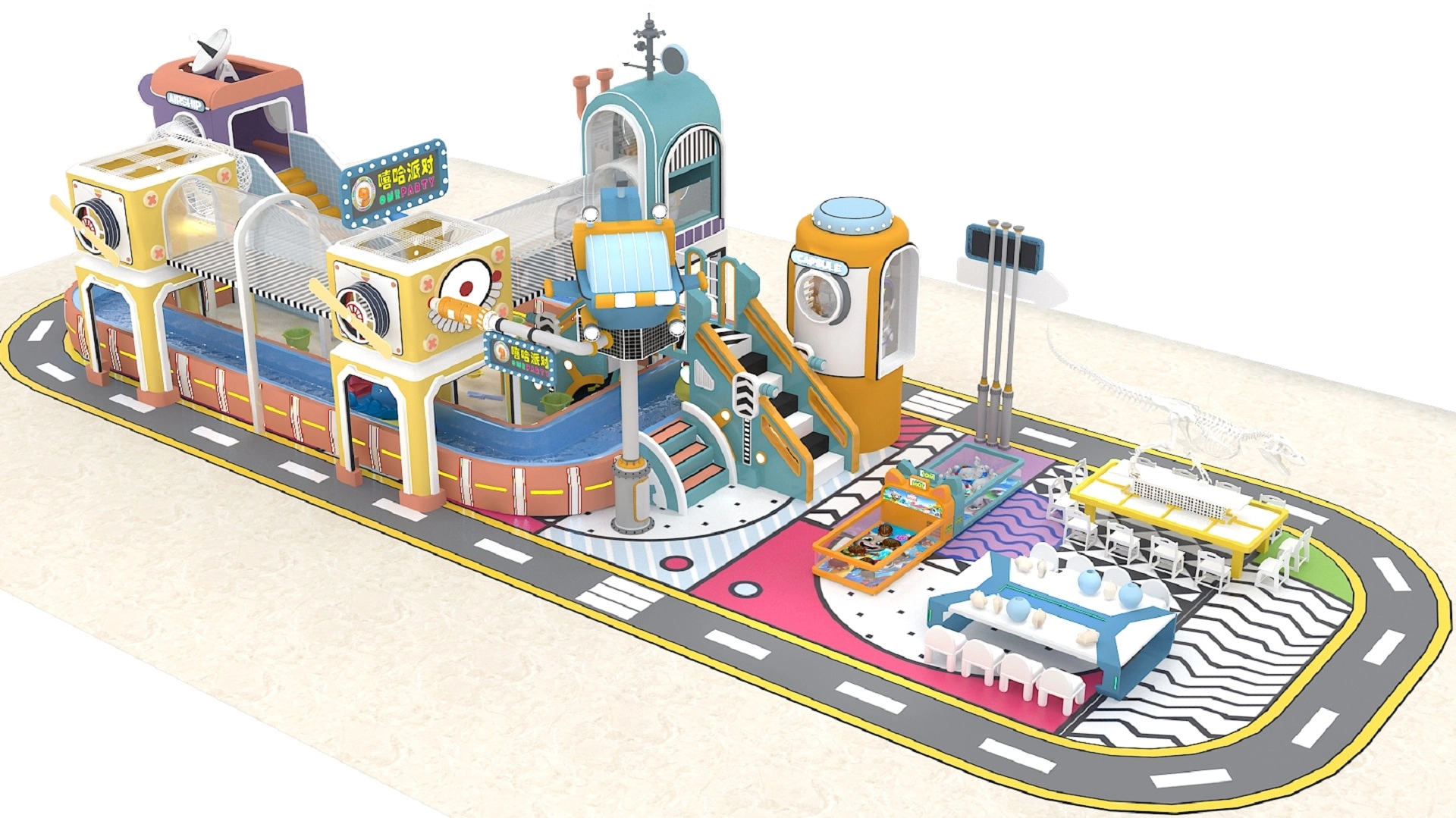
FEI FAN’s Dinosaur Theme Indoor Playground Equipment offers a safe, fun Kids Amusement Park experience with colorful Children Soft Playground features. Ideal for indoor play areas, it encourages active, imaginative play while ensuring comfort and safety. Perfect for all ages.
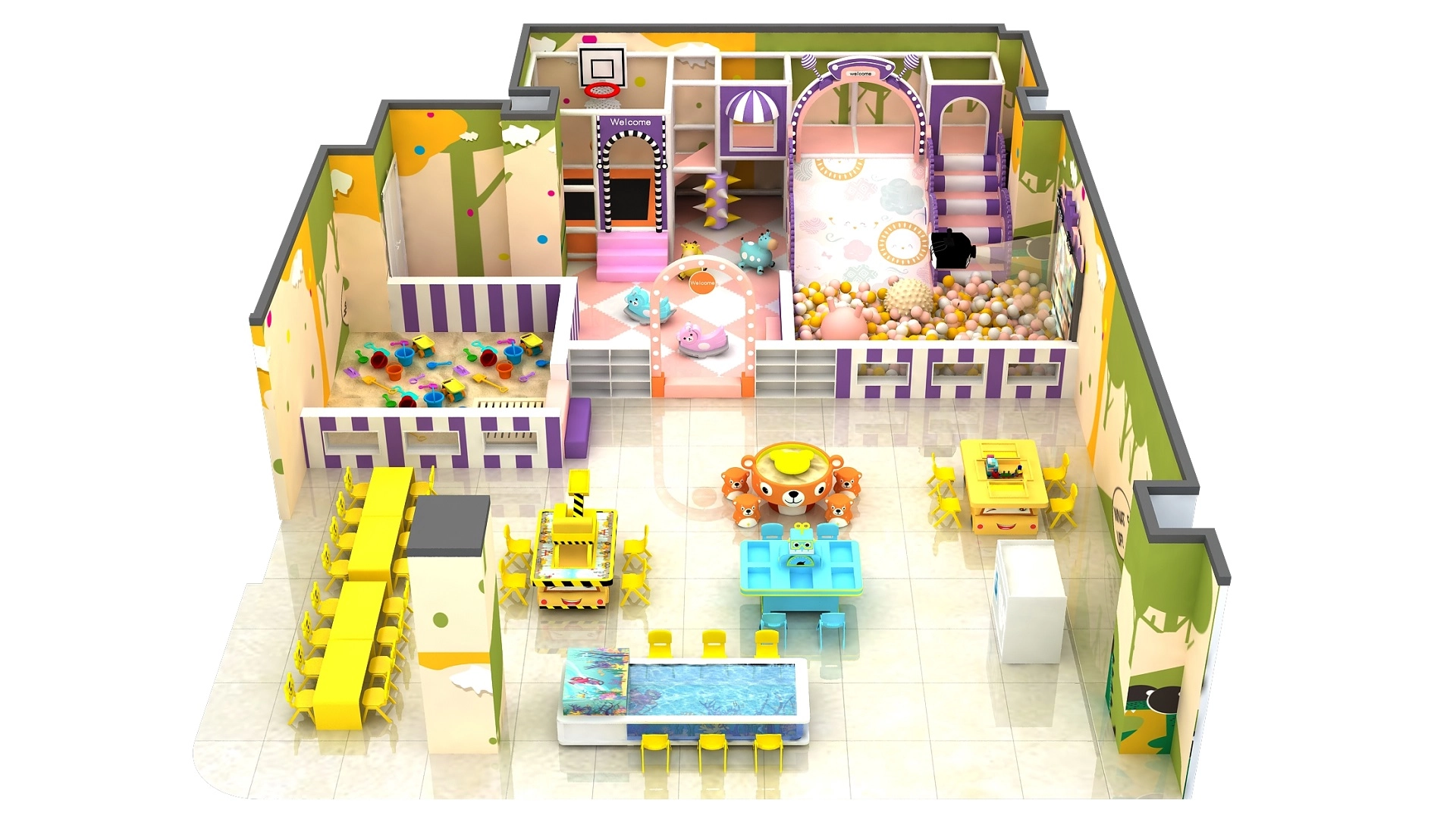
FEI FAN offers customized kids indoor playground equipment designed for commercial spaces. Our safe, durable indoor playground equipment creates fun, engaging environments that promote active play and development. Perfect for businesses seeking quality kids indoor playground solutions.

Get in touch
Let’s Build Your Dream Indoor Playground Together
Thank you for your interest in our products and services!
We’re dedicated to providing you with the best possible support and solutions for your needs.
FEI FAN is a premier Indoor Playground Manufacturer specializing in Kids Soft Play Equipment. From design to installation, we provide one-stop solutions for indoor play centers, daycares, and commercial venues globally.
© 2025 Feifan Amusement Equipment. All Rights Reserved.
 Scan QR Code
Indoor Soft Playground
Whatsapp: +8619068970573
Scan QR Code