Space Planning for Indoor Playground Equipment
Designing Play Spaces That Work
Space planning is the foundation of any successful indoor play facility. Whether you are developing a small soft-play area for a family entertainment center or a large multi-zone indoor playground, careful layout, adherence to safety standards and equipment selection aligned to your business goals are essential. This guide explains how to plan floor area, circulation, safety zones, surfacing, MEP requirements, and operational considerations for indoor playground equipment so you can deliver safe, engaging and profitable play spaces.
Understanding capacity and layout for indoor playground equipment
Start with the target capacity — the number of concurrent users you expect at peak. Capacity drives the required net play area, staffing, WC and support spaces, and ly the equipment mix. A useful planning workflow is:
- Define peak daily attendance (from market research or comparable venues).
- Determine target dwell time per visit (60–120 minutes typical for play centers).
- Allocate play-space by user group (toddlers, preschool, school-age), plus parent seating and circulation.
- Design zoning so higher-energy activities are separated from calmer areas.
Net play area should be the primary metric when sizing your floor plan. Net play area = equipment footprint + interaction zones + clear circulation. Because operational policies (age grouping, sessioning) alter required space, plan scenarios rather than a single layout.
Zoning and adjacency: safe flow around indoor playground equipment
Effective zoning both improves safety and increases throughput. Typical zones for an indoor playground include:
- Entry and reception — check-in and queuing.
- Parent and caregiver seating with sightlines to play zones.
- Toddler area — low modules, soft surfacing, visual boundaries.
- Active/primary play structure — multi-level modules, slides, tunnels.
- Specialty zones — trampolines, foam pits, climbing walls, party rooms.
- Support spaces — toilet rooms, staff room, storage, first aid.
Key adjacency rules:
- Place toddler and preschool areas near parent seating and toilets.
- Isolate high-energy elements (trampolines, free-jump) with physical barriers and clear buffering zones.
- Design unidirectional circulation where possible to reduce congestion at popular moves (slides, climbing entries).
Choosing surfacing and safety standards for indoor playground equipment
Surfacing is arguably the single most important safety decision after layout. Impact attenuation, slip resistance, and maintenance are the top selection criteria. Common indoor surfacing options include bonded rubber, poured-in-place (PIP) rubber, EVA foam tiles, carpet backed with padding, and artificial turf over padding. Each option has trade-offs in cost, durability and shock absorption.
| Surface Type | Pros | Cons | Notes on Safety |
|---|---|---|---|
| Bonded rubber/PIP | Excellent impact attenuation, durable, seamless | Higher initial cost, professional installation | Meets ASTM F1292 impact attenuation when designed to depth |
| EVA foam tiles | Low cost, easy replacement, good for toddlers | Less durable in high wear; seams can separate | Suitable for low-height falls |
| Carpet with padding | Comfortable, aesthetic variety | Lower impact performance, harder to clean | Use where falls are limited |
| Artificial turf over padding | Good for sporting zones, durable, drainable | Can retain odor if wet, variable impact properties | Choose turf designed for play zones and tested for impact |
Relevant safety standards and guidance include ASTM F1292 (impact attenuation), EN 1176 (European playground equipment standards), and recommendations from the U.S. Consumer Product Safety Commission (CPSC) and IPEMA. Conduct testing or request test certificates from manufacturers for any surfacing and equipment you select (see references).
Equipment selection and footprint planning for indoor playground equipment
Equipment choice should reflect your market, budget and operational model. A balanced mix increases appeal and improves revenue — consider free play modules, sensory/toddler items, climbing features, and paid add-ons (VR, skill games). When planning footprints, consider both the installed module footprint and the required free zone around moving parts (slides, swings).
Sample equipment footprint guidance (estimates for planning) — use these only as starting points and confirm with manufacturers:
| Equipment Type | Typical Installed Footprint (m²) | Recommended Buffer/Clearance |
|---|---|---|
| Small soft-play module | 20–50 | 1.0–1.5 m clear perimeter |
| Multi-level play structure | 50–300 | 1.5–2.5 m clear perimeter, greater at slide exits |
| Trampoline bays (per bay) | 15–40 | 1.5–3.0 m safety zone |
| Foam pit / stunt area | 20–80 | Pit depth and run-up distances per supplier |
Always obtain the manufacturer-supplied layout and safety zones for each item — these are contractual requirements for insurance and compliance.
HVAC, lighting, acoustics and maintenance for indoor playground equipment
MEP design for indoor playgrounds must support high occupant densities, ease of cleaning and durability. Key mechanical/electrical considerations:
- Ventilation — design to maintain good indoor air quality; consider higher ACH (air changes/hour) for high-activity zones and areas with trampolines or foam pits where dust is common.
- Temperature — maintain comfort for children and caregivers; avoid cold surfaces near barefoot areas.
- Lighting — even, glare-free illumination; accent lighting for themed areas but adequate general illumination for supervision.
- Acoustics — consider sound-absorbing finishes, baffles or acoustic clouds to reduce cumulative noise levels and support staff communication.
- Cleaning access — equipment must be accessible for regular cleaning and disinfection; choose materials with accepted cleanability.
Maintenance plans and spare parts availability should be part of procurement. Regular inspections, documented maintenance logs and staff training reduce downtime and improve safety compliance.
Budgeting, phasing and ROI for indoor playground equipment
Space planning is closely tied to financial planning. Typical cost centers include equipment purchase, site construction, surfacing, MEP upgrades, FF&E (furniture, fixtures, equipment), and professional fees (design, engineering, certification). ROI is driven by capacity, ticket pricing, ancillary revenue (food, parties, retail), and operational efficiency.
Consider a phased approach for new operators: launch a core play module and add High Quality zones (trampoline, VR, climbing) later. Phasing spreads capital cost, helps refine operations, and lets you test market demand before larger investments.
Implementation checklist & sample space calculation for indoor playground equipment
Below is a practical checklist and an example calculation to translate capacity into space requirements. Numbers are illustrative; always validate with your project team and equipment suppliers.
- Checklist: site constraints, structural capacity, headroom (multi-level modules need height clearance), utilities, ingress/egress and egress routes, fire code compliance, accessibility (ADA or local equivalent), toilet counts, staff facilities, storage, acoustics and ventilation.
Example calculation (illustrative):
| Item | Assumption | Area (m²) |
|---|---|---|
| Target concurrent capacity | 150 persons | — |
| Area per person (net play area assumption) | 2.0 m²/person (estimate for mixed-age indoor play) | 300 |
| Equipment footprints (estimated) | Multi-level module + trampoline + toddler zone | 200 |
| Circulation and buffer (30%) | Percentage of net play + equipment | 150 |
| Support spaces (party rooms, WC, staff) | Fixed allowance | 150 |
| Estimated gross building area | 800 m² |
Notes: the 2.0 m²/person is an illustrative starting point; different formats (e.g., trampoline parks) require larger per-person footprints. Confirm your program and site constraints before committing.
Why choose Guangzhou Feifan (FEI FAN) for indoor playground equipment
Guangzhou Feifan Amusement Equipment Co., Ltd. was established in 2017 and integrates design, R&D, production, sales and service. With a modern factory building of 6400 m² and a 5800 m² office building, Feifan has the capacity to deliver fully customized indoor playground solutions. The company’s main products include indoor playgrounds, trampoline park equipment, and outdoor amusement equipment.
FEI FAN focuses on high-end indoor and outdoor children's amusement equipment and is committed to safety, quality and imaginative play. Key competitive strengths:
- End-to-end service: from concept and professional design to manufacturing and on-site installation, simplifying procurement for operators.
- Manufacturing scale and quality control in a modern facility, enabling consistent product quality and reasonable lead times.
- Product range: indoor playgrounds, trampoline parks, and Indoor Theme Park installations — enabling clients to source broad multi-zone solutions from one supplier.
- Customization: tailored theming and modular designs to fit specific spatial constraints and brand requirements.
- Global experience and reputation: projects delivered both at home and abroad, plus industry know-how for safety and compliance.
FEI FAN positions itself not just as an equipment supplier but as a creator of joyful experiences, helping operators enhance parent-child interaction and support child development through professionally designed play environments.
How FEI FAN supports space planning and implementation
- Preliminary site evaluation and schematic design aligned to target capacity and business model.
- Equipment layouts with manufacturer-specified safety buffers to simplify permitting and compliance reviews.
- Custom surfacing and themed elements coordinated with MEP and finish packages.
- After-sales service, spare parts and maintenance guidance to protect your investment.
Choosing an integrated manufacturer like FEI FAN reduces coordination risk, helps control cost and shortens project timelines, which is particularly valuable for multi-zone projects such as Indoor Theme Parks or combined trampoline and soft-play centers.
Implementation CTA
If you are planning an indoor playground, trampoline park or Indoor Theme Park, contact FEI FAN for a free initial consultation and schematic layout based on your site. Collaborate with a partner experienced in safety standards, manufacturing and turnkey delivery to turn your concept into a reliable, revenue-generating play space.
FAQ — Space Planning for Indoor Playground Equipment
1. How much space do I need per child for an indoor playground?
There is no one-size-fits-all answer. A planning range is typically 1.5–3.0 m² per child for soft-play centers, but it varies by age mix and activity type. Use scenario planning and supplier-provided equipment footprints to produce precise area estimates.
2. What surfacing is safest for multi-level play structures?
Seamless rubber surfacing (bonded or poured-in-place) installed to the required depth to meet impact attenuation standards (e.g., ASTM F1292) is a durable and safe choice for areas under elevated modules and slide exits. Confirm test certificates for the installed system.
3. Do indoor playgrounds require special HVAC or ventilation?
Yes. Increased occupant density and activity levels mean you should provide higher ventilation rates than typical retail spaces, address moisture control in wet or pit areas, and consider localized extraction for messy attractions. Coordinate with mechanical engineers early in design.
4. How do I separate different age groups safely within one play area?
Use physical barriers, clear visual separation, dedicated entrances and staggered session times. Design toddler zones with lower heights and different surfacing and ensure sightlines from caregiver seating into each zone.
5. What regulatory standards should I check during design?
Consult local building and fire codes, and refer to recognized playground standards such as ASTM F1292 (impact attenuation), EN 1176 (Europe) and supplier guidance. For certification and insurance, retain documentation of compliance and third-party testing where required.
6. How do I estimate budget for equipment and installation?
Costs depend on complexity and materials. Obtain itemized quotes from reputable manufacturers that include installation, surfacing, and warranties. Factor in MEP upgrades, design fees, and soft costs (permits, inspections). Consider phasing higher-cost attractions to spread capital expenditure.
7. Can a manufacturer help with layout and permitting?
Yes—reputable manufacturers like FEI FAN provide layout drawings, safety zone specifications and technical documents that help with permitting. Early engagement reduces coordination delays.
If you have specific project plans or a site, request a schematic layout and preliminary equipment budget from a trusted supplier to begin precise space planning.
Ready to plan your indoor playground? Contact Guangzhou Feifan Amusement Equipment Co., Ltd. for a consultation, schematic layout and product catalog to match your site and business goals. Build safer, more engaging play spaces with a partner experienced in design, manufacturing and turnkey delivery.
References
- U.S. Consumer Product Safety Commission (CPSC) — Playground Safety: https://www.cpsc.gov/Safety-Education/Safety-Guides/Playgrounds (accessed 2025-11-01)
- ASTM International — ASTM F1292 Standard Specification for Impact Attenuation of Surfacing Materials: https://www.astm.org/Standards/F1292.htm (accessed 2025-11-01)
- IPEMA — International Play Equipment Manufacturers Association: https://ipema.org/ (accessed 2025-11-01)
- EN 1176 — Playground equipment and surfacing (European Committee for Standardization): https://standards.cen.eu/dyn/www/f?p=204:110:0::::FSP_PROJECT:36805&cs=1D8A9C9A6B0E9F1 (accessed 2025-11-01)
- Centers for Disease Control and Prevention (CDC) — Physical Activity Facts for Children: https://www.cdc.gov/physicalactivity/basics/children/index.htm (accessed 2025-11-01)
- Grand View Research — Indoor Playgrounds Market Overview (market reports and trends): https://www.grandviewresearch.com/industry-analysis/indoor-playgrounds-market (accessed 2025-11-01)

Top Hot Sale Trampoline Park Equipment Brands Compared
Top Safety Standards for Soft Indoor Playground Equipment
Installation Guide for Indoor Play Equipment
Best soft indoor playground manufacturers and supplier brands in China
Schools Educational Institutions
Do you provide maintenance after installation?
Yes, we offer long-term after-sales service, including maintenance, spare parts, and technical support.
Indoor Playgrounds Trampoline Parks
How do you ensure safety in trampoline parks?
Our equipment is designed with soft padding, safety nets, and international certifications, and we provide operational safety guidelines for daily use.
Shopping MallsRetail Centers
How do your amusement areas benefit shopping malls?
They attract more families, increase dwell time, boost customer loyalty, and enhance overall mall revenue.
What is the warranty period?
We offer a 1–3 year warranty depending on the product type, along with lifetime technical support.
OEM & ODM
Is installation included in your service?
We provide clear manuals, video guides, and can assist remotely or on-site.
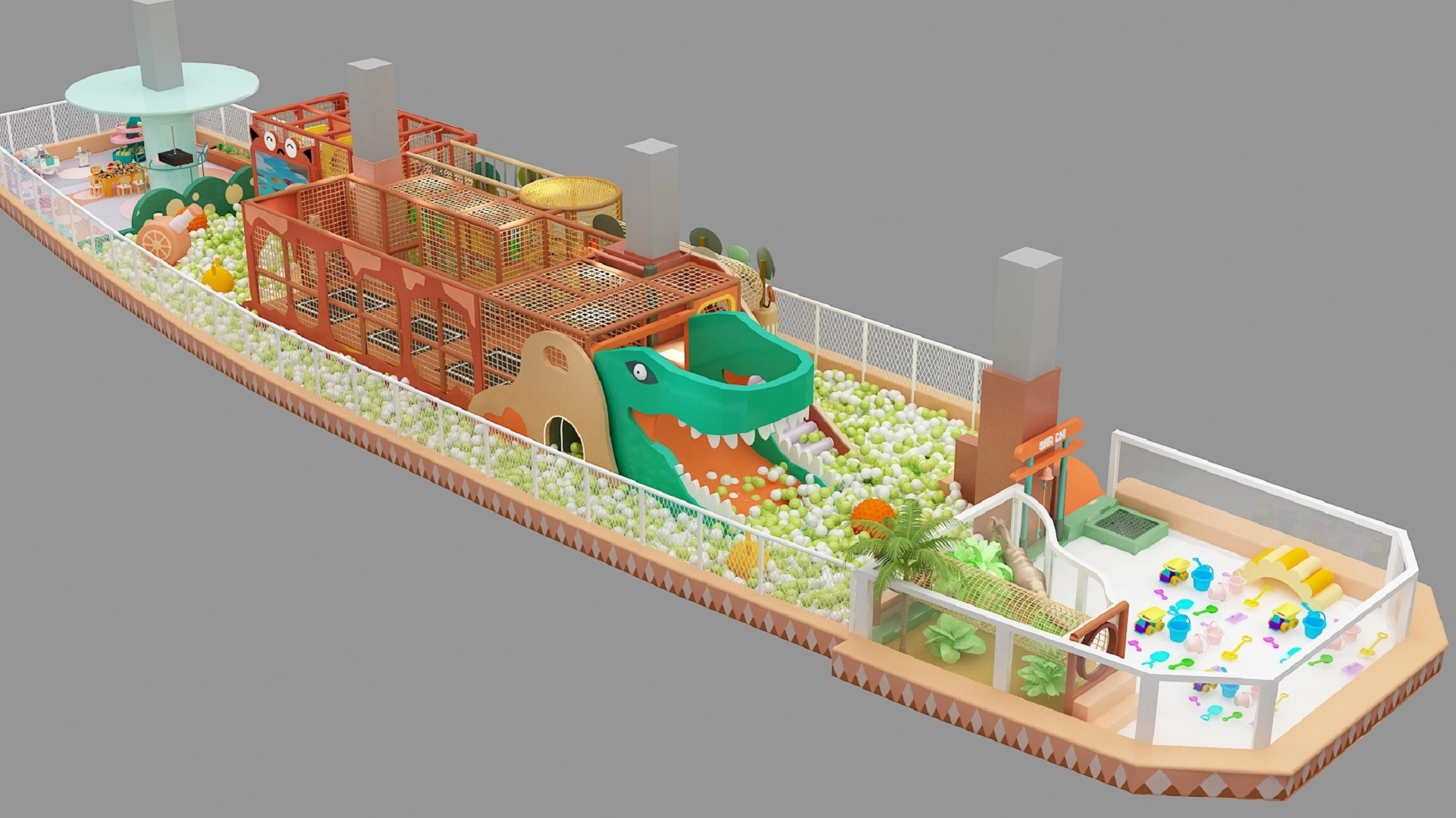
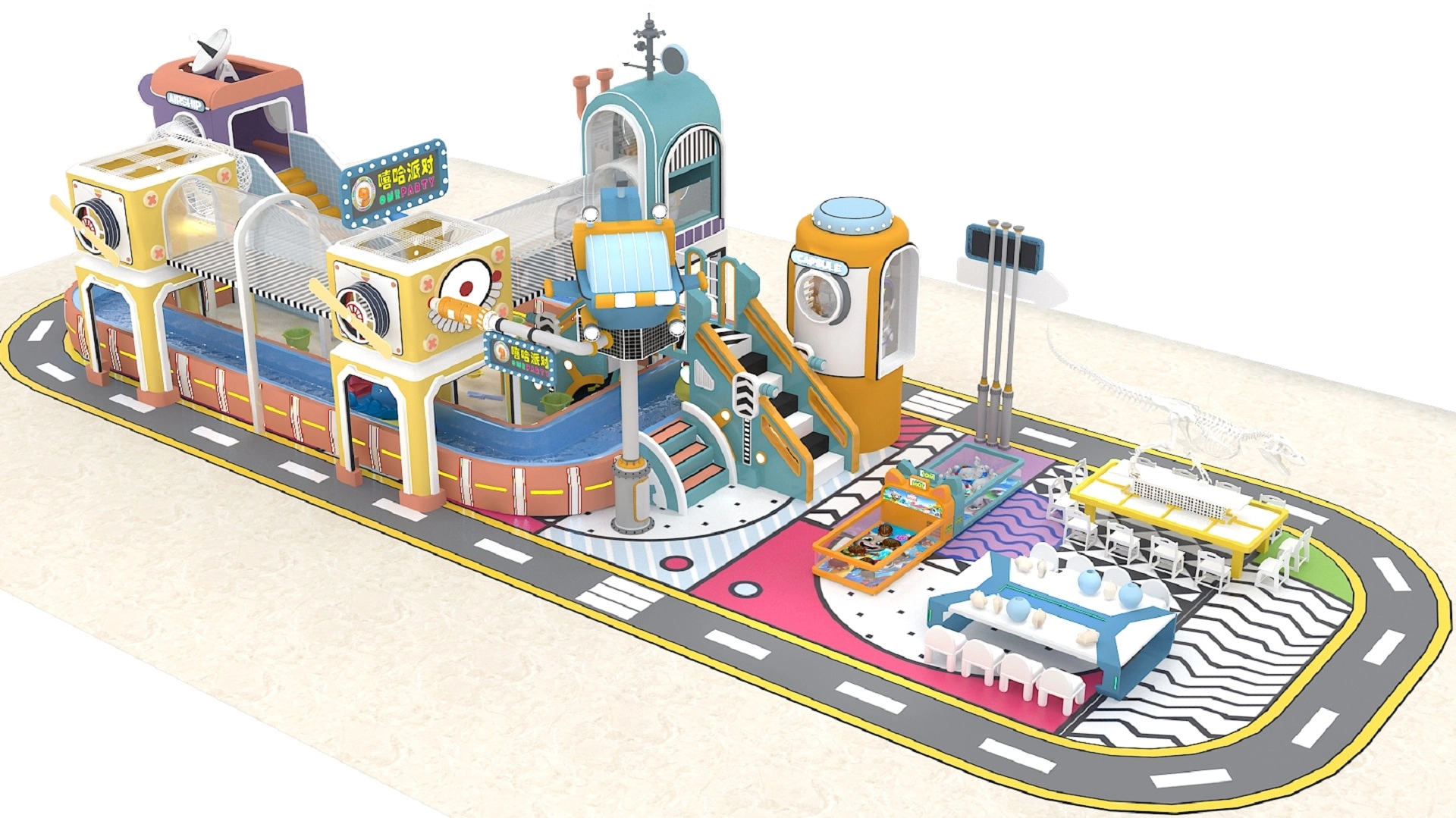
FEI FAN’s Dinosaur Theme Indoor Playground Equipment offers a safe, fun Kids Amusement Park experience with colorful Children Soft Playground features. Ideal for indoor play areas, it encourages active, imaginative play while ensuring comfort and safety. Perfect for all ages.
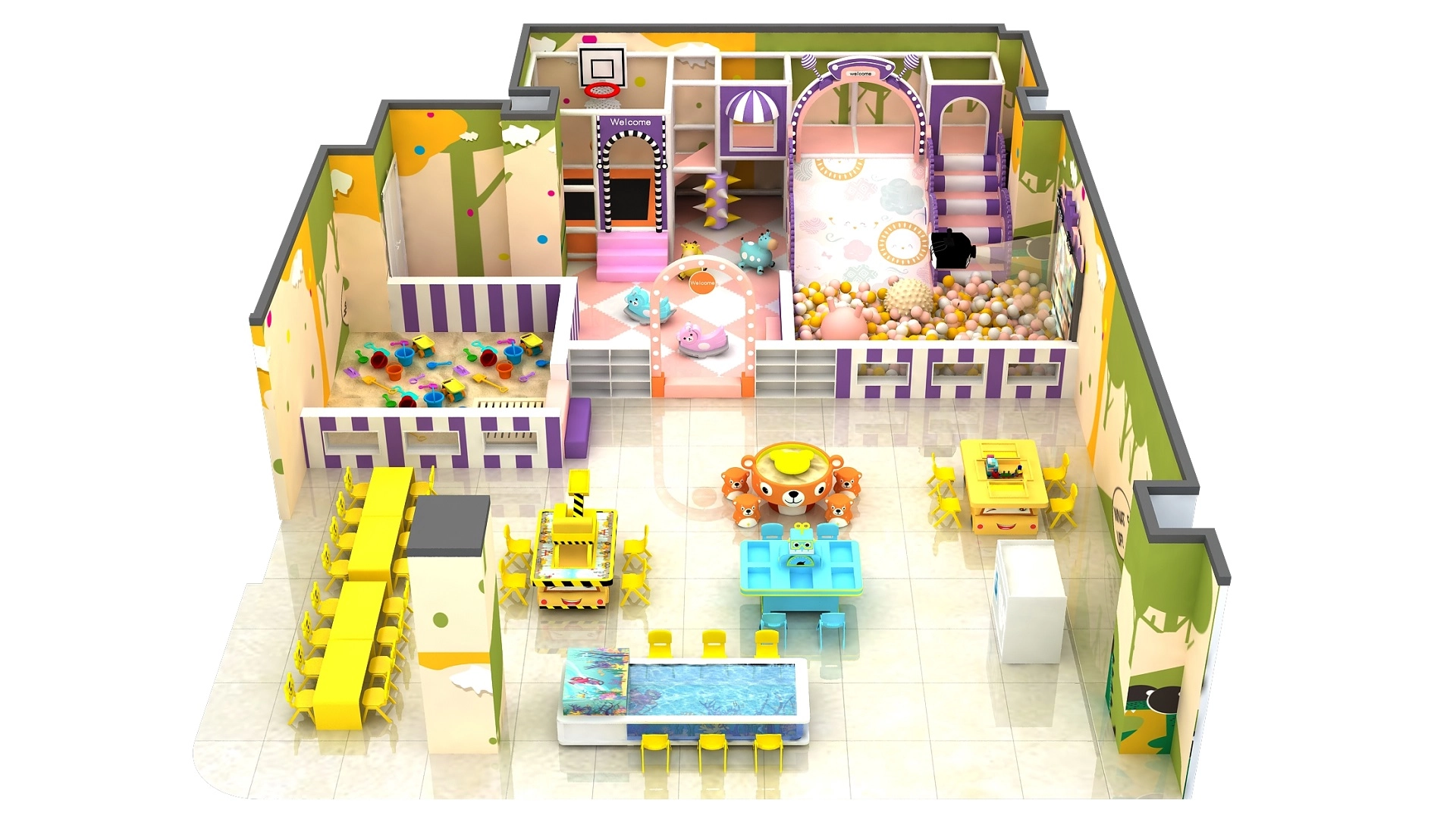
FEI FAN offers customized kids indoor playground equipment designed for commercial spaces. Our safe, durable indoor playground equipment creates fun, engaging environments that promote active play and development. Perfect for businesses seeking quality kids indoor playground solutions.

Get in touch
Let’s Build Your Dream Indoor Playground Together
Thank you for your interest in our products and services!
We’re dedicated to providing you with the best possible support and solutions for your needs.
FEI FAN is a premier Indoor Playground Manufacturer specializing in Kids Soft Play Equipment. From design to installation, we provide one-stop solutions for indoor play centers, daycares, and commercial venues globally.
© 2025 Feifan Amusement Equipment. All Rights Reserved.
 Scan QR Code
Indoor Soft Playground
Whatsapp: +8619068970573
Scan QR Code