| Quick fact | Practical boundary |
|---|---|
| Best use of price ranges | Early feasibility screening before a supplier reviews your layout |
| Biggest cost drivers | Floor area, ceiling height, play mix, theme, materials, shipping route, and installation scope |
| Most common quote problem | Comparing equipment-only price with delivered or installed price |
| Local-cost warning | Permits, fire review, accessibility, HVAC, and insurance vary by jurisdiction |
| Best next step | Prepare a floor plan, ceiling height, target age group, activity mix, and destination country before asking for price |
Indoor Playground Equipment Cost by Project Scale

Use the table below as an early FEI FAN project-planning tool before requesting a supplier quote. It is not a universal market average and it does not include every cost needed to open a facility.
| Project scale | Early equipment budget planning range | Scope boundary |
|---|---|---|
| Small soft play or cafe corner, about 300-800 sq ft | USD 8,000-30,000 | Usually a simple soft play footprint. Freight, duties, major renovation, and local review are normally separate. |
| Mid-size play cafe, about 800-1,500 sq ft | USD 30,000-70,000 | More play events, stronger theme work, and more custom structure. Installation and site work should be separated in the quote. |
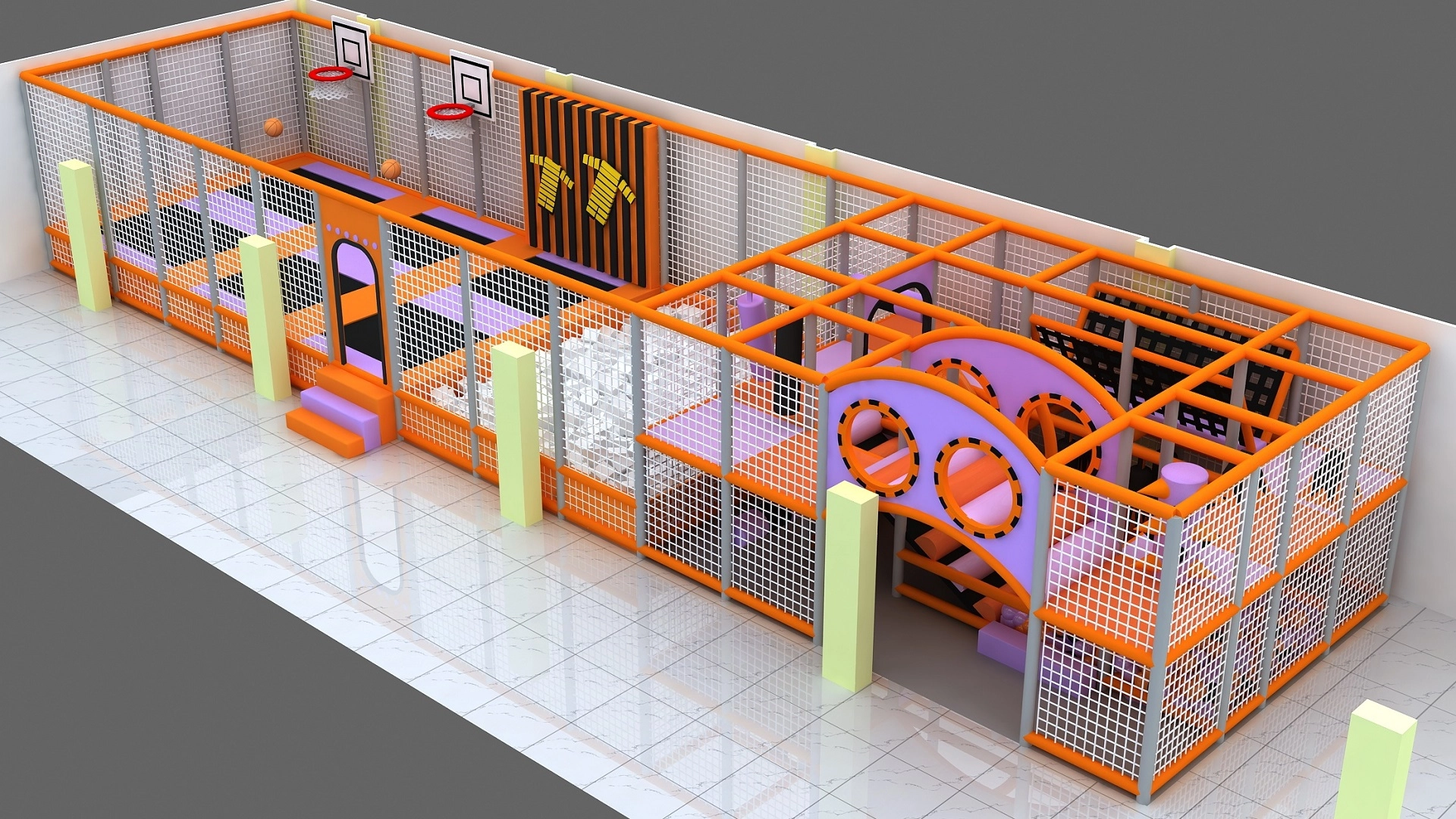
| Standalone indoor playground, about 1,500-3,000 sq ft | USD 60,000-150,000 | Larger structure, slides, netting, themed zones, and more complex layout. Height and activity mix can move the quote sharply. |
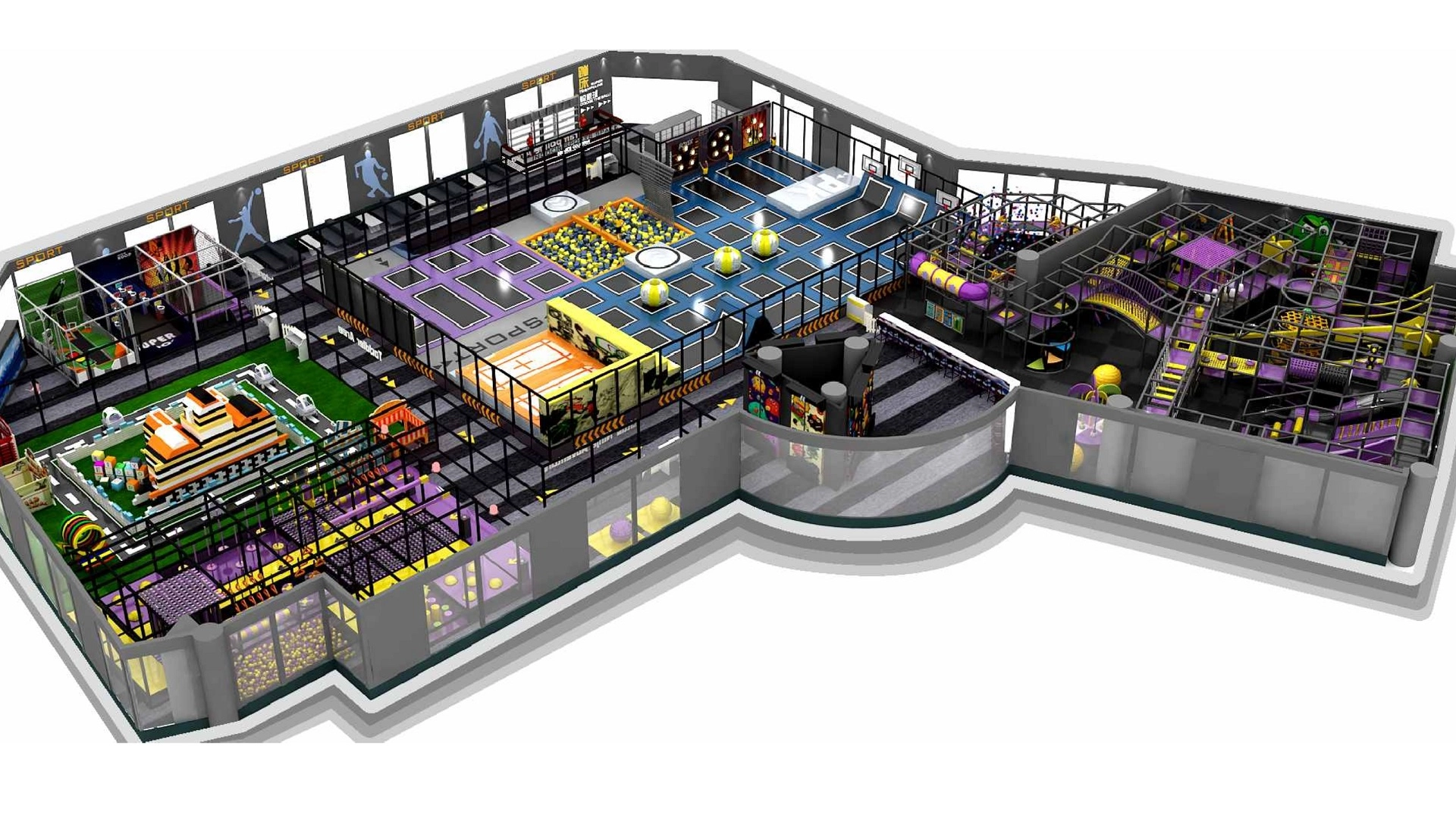
| Large family entertainment center, 3,000+ sq ft | USD 150,000-500,000+ | Multi-zone project with custom attractions and complex installation planning. A project-specific quotation is required. |
| Rough per-area screening | USD 100-250 per square meter | Useful only as a first check. A layout-based quote is still needed. |
The safest way to use these numbers is to treat them as a starting conversation. A 1,200 sq ft project with simple toddler soft play is not the same as a 1,200 sq ft project with slides, climbing, net courses, digital play, and heavy theming. Area matters, but it is not the whole price.
What the Price Includes: Equipment-Only, Delivered, Installed, or Opening Budget

Before comparing suppliers, ask which cost layer each number represents. The U.S. Small Business Administration's startup-cost guidance separates equipment from other startup expenses such as space, utilities, licenses, insurance, salaries, and working capital; see References. The same logic helps indoor playground buyers avoid mixing an equipment quote with a full opening budget.
| Cost layer | What it may include | What it often excludes |
|---|---|---|
| Equipment-only price | Play structure, soft play elements, slides, netting, panels, selected activity components | Freight, customs, installation, site renovation, local permits, business startup costs |
| Delivered equipment cost | Equipment plus packing and transport to a defined destination or port | On-site labor, tools, lifts, building work, local inspections |
| Installed equipment cost | Equipment plus agreed installation labor or installation guidance | Venue fit-out, HVAC, fire systems, insurance, staffing, working capital |
| Full opening budget | Equipment, site work, permits, operations setup, launch cash, and other startup items | Anything outside the owner's project scope or local professional review |
This distinction is especially important when a buyer asks, "How much does it cost to build an indoor playground?" The answer may be about equipment, construction, startup capital, or the full business launch. For broader business planning, pair this article with the indoor playground business startup guide.
Cost Drivers That Move the Quote Up or Down

Indoor playground equipment cost changes when the engineering, material, manufacturing, or installation scope changes. The main variables are usually:
| Cost driver | Why it changes the quote | What to clarify before quoting |
|---|---|---|
| Floor area | Larger footprints need more structure, padding, netting, and activity events. | Usable play area, not just leased area |
| Ceiling height | Taller structures can require different frame design, access planning, and installation steps. | Clear height after lighting, ducts, sprinklers, and signs |
| Target age group | Toddlers, mixed-age children, and older kids need different activity intensity and safety planning. | Primary and secondary age bands |
| Attraction mix | Slides, ball pits, trampolines, climbing, tunnels, role play, and digital play have different cost profiles. | Must-have features versus optional features |
| Theme and customization | Custom facade, colors, shapes, and story elements add design and production time. | Standard theme, semi-custom, or fully custom |
| Materials and documentation | Padding, netting, fasteners, surfacing, documentation, and specification requirements affect scope. | Required standards, certificates, and local review needs |
| Shipping and installation route | Destination, packing volume, import process, site access, and installer plan affect delivered and installed cost. | Country, port/city, and whether local installers are available |
ASTM F1918-21 is the active ASTM safety performance specification for soft contained play equipment, and its public scope page shows that it addresses soft contained play systems rather than every type of indoor amusement attraction; see References. That is why a supplier quote should state which equipment category and documentation scope it is pricing.
For projects that need coordinated design, production, installation guidance, and after-sales support, FEI FAN's project design and installation support page is the relevant internal service path.
Equipment Features That Change the Budget

Feature selection can change the budget as much as total area. A simple soft play corner may be mostly padding, low obstacles, small slides, and toddler activities. A larger commercial structure may include multi-level frames, tall slides, net bridges, tube crawls, obstacle courses, ball cannons, climbing sections, or interactive elements.
| Feature group | Cost effect | Planning note |
|---|---|---|
| Toddler soft play | Usually lower structural complexity but needs careful padding and age-appropriate sizing. | Keep routes visible and easy for caregivers to supervise. |
| Ball pits, slides, and net courses | Adds volume, molded parts, netting, and more route planning. | Confirm capacity, access, and maintenance approach. |
| Trampoline or active sports zones | Can add structure, impact management, supervision, and local review considerations. | Do not price as ordinary soft play. |
| Climbing, rope, or challenge courses | Can raise engineering, anchoring, and fall-protection planning needs. | Confirm ceiling height and support conditions early. |
| Interactive or digital play | Adds equipment, wiring, software/hardware coordination, and maintenance planning. | Separate technology cost from soft play structure. |
| Full theme customization | Adds design, modeling, material, and production detail. | Decide which visual elements drive revenue or brand value. |
The practical rule is simple: do not ask only for a square-meter price. Ask for a layout, a feature list, and the inclusions behind the number.
Hidden Costs After the Equipment Quote

The equipment quote is only one part of the project budget. SBA startup-cost guidance encourages business owners to identify expenses before launch, including space, equipment, licenses, permits, insurance, payroll, marketing, and working capital; see References. Indoor playground buyers should apply the same discipline before signing a lease or deposit.
Ask suppliers and local professionals to separate these items:
| Quote line | Why it matters |
|---|---|
| 1. Equipment and play components | The core structure, activities, soft play, and selected features |
| 2. Design and drawings | Layout, theme, revisions, and technical documentation |
| 3. Packing and freight | Export packing, container volume, destination, and delivery terms |
| 4. Duties, taxes, and import handling | Country-specific and usually outside the equipment factory price |
| 5. Installation labor or guidance | On-site team, remote guidance, local crew, tools, lifts, and schedule |
| 6. Surfacing and padding outside the main structure | May be separate from the play equipment package |
| 7. Building fit-out | HVAC, lighting, flooring, fire systems, restrooms, reception, party rooms, and signage |
| 8. Local permits, insurance, and professional review | Varies by city, country, and facility type |
| 9. Spares, cleaning, and maintenance setup | Replacement parts, inspection routine, cleaning supplies, and staff procedures |
For installation-specific budget planning, use the installation cost guide as a separate support page rather than folding every installation question into the equipment price.
Safety, Accessibility, and Local Review Costs

Safety and access requirements can affect equipment design, surfacing, documentation, and local approval work. They should be treated as project requirements, not as decorative add-ons.
For soft contained play systems, ASTM F1918-21 is the relevant ASTM specification page to review, but the public ASTM page should not be treated as a substitute for the full standard, a local legal opinion, or proof that a specific product complies; see References. For U.S. public playground safety context, the U.S. Consumer Product Safety Commission publishes the Public Playground Safety Handbook, and CPSC also has an indoor play surfacing impact-attenuation report; see References. For U.S. accessibility context, the 2010 ADA Standards include play-area provisions, but ADA requirements should not be generalized to every country; see References.
For a global commercial project, ask three separate questions:
- What equipment standard or buyer specification applies to this play system?
- What local building, fire, accessibility, insurance, or inspection rules apply to this venue?
- What documents will the supplier provide, and what must be handled by local professionals?
FEI FAN's certification and quality documents page can be used as a trust link, but the final requirement for a project still depends on product type, destination market, and local review.
How to Compare Indoor Playground Supplier Quotes

The cheapest quote is not always the lowest project cost. A better comparison starts by making each supplier answer the same scope questions.
| Comparison point | What to request |
|---|---|
| Layout basis | The same floor plan, ceiling height, and usable play area |
| Equipment scope | Activity list, structure size, material description, and excluded items |
| Design scope | Number of revisions, theme detail, drawings, and documentation |
| Shipping terms | Packing, volume estimate, destination, and trade term assumptions |
| Installation scope | On-site installation, remote guidance, local labor responsibility, tools, and schedule |
| Safety/documentation scope | Standards, certificates, manuals, and buyer/local documentation needs |
| Warranty and after-sales support | Spare parts, maintenance guidance, response process, and support boundaries |
| Quote validity and assumptions | Currency, validity date, exclusions, and price-change triggers |
Use the same checklist with every supplier. If two quotes differ sharply, look first at exclusions, material specifications, freight terms, installation scope, and documentation before assuming one supplier is simply cheaper.
Quote-Ready Checklist: What to Send Before Asking for Price

A reliable indoor playground equipment quote starts with project details. Before you ask for a final number, prepare:
- Floor plan or measured layout.
- Clear ceiling height after ducts, lights, sprinklers, and signs.
- Country, city, and preferred delivery destination.
- Target age group and expected user mix.
- Main attraction types: toddler soft play, slides, net courses, trampoline, climbing, digital play, role play, or party room connection.
- Desired theme, colors, and customization level.
- Budget boundary: equipment-only, delivered, installed, or full opening budget.
- Site status: empty shell, renovated space, existing playground, or expansion.
- Installation plan: supplier team, local installer, or remote guidance.
- Any known local review, insurance, fire, accessibility, or documentation requirements.
When you have those items, you can contact FEI FAN with project requirements and ask for a quote that separates equipment, freight, installation, and exclusions.
ROI Reality Check: Equipment Cost Is Not the Business Model

Indoor playground equipment cost does not determine profitability by itself. A venue can only judge commercial viability after modeling rent, payroll, utilities, insurance, cleaning, repairs, marketing, party bookings, ticket pricing, capacity, financing, and working capital.
The SBA's break-even guidance frames the calculation around fixed costs, price, variable costs, projected sales, and contribution margin; see References. That approach is more reliable than asking whether a playground "makes money" from the equipment price alone.
Use this basic planning logic:
| Planning question | Why it matters |
|---|---|
| What are monthly fixed costs? | Rent, payroll, utilities, insurance, software, loan payments, and base marketing |
| What is the average revenue per visit or party? | Ticket mix, party packages, memberships, cafe sales, and add-ons |
| What variable costs rise with traffic? | Cleaning, staffing hours, consumables, payment fees, and maintenance |
| What attendance is needed to break even? | Helps test whether the venue size and market are realistic |
| What maintenance reserve is needed? | Protects cash flow after opening |
Conclusion
Indoor playground equipment cost should start with broad planning ranges, but it should not end there. Use the numbers to test feasibility, then separate equipment-only price from delivered cost, installed cost, and full opening budget. The most useful supplier quote is the one that states its assumptions, exclusions, materials, shipping terms, installation scope, and documentation clearly.
References & Sources
- ASTM F1918-21 - ASTM International; used for the public scope and status of the soft contained play equipment safety performance specification.
- Public Playground Safety Handbook - U.S. Consumer Product Safety Commission; used for U.S. public playground safety guidance context.
- Surfacing Materials for Indoor Play Areas - U.S. Consumer Product Safety Commission; used for indoor play surfacing and impact-attenuation context.
- 2010 ADA Standards for Accessible Design - ADA.gov / U.S. Department of Justice; used for U.S. accessibility and play-area context.
- Calculate Your Startup Costs - U.S. Small Business Administration; used for startup-cost planning boundaries.
- Break-even Point - U.S. Small Business Administration; used for break-even planning logic.
Discuss Your Indoor Playground Budget With FEI FAN
If you are planning a commercial indoor playground, prepare your floor plan, clear height, destination country, target age group, preferred attractions, and budget boundary first. Then contact FEI FAN with project requirements so the discussion can separate equipment, delivery, installation, and local-site assumptions instead of relying on one vague price.
Scan QR Code
Indoor Soft Playground
Whatsapp: +8619068970573
Scan QR Code