Top Indoor Playground Equipment Trends 2026
What Operators Need to Know About Indoor Play Equipment in 2026
The indoor play market continues to evolve rapidly. For owners, designers, and operators, choosing the right indoor playground equipment in 2026 means balancing safety and compliance, guest experience, operational efficiency, and long-term return on investment. This article analyzes the most important equipment trends, how they affect project costs and operations, and concrete recommendations to select, specify, and validate indoor playground equipment for commercial use.
1. Safety, Standards, and Compliance: indoor playground equipment that minimizes liability
Safety remains the non-negotiable starting point for any purchasing decision. In 2026, indoor playground equipment is increasingly built to meet or exceed recognized standards (ASTM F1487 for public playgrounds, CEN/EN 1176 in Europe, and local safety codes). Operators must request third-party test reports, material safety data sheets (MSDS), and samples of impact-attenuating surfacing.
- Actionable step: Require certificates of compliance (COC) and independent lab test results as part of the RFP.
- Actionable step: Specify surfacing testing for critical fall heights and ensure equipment is installed with manufacturer guidance and signed installation certification.
Why it matters: Properly certified equipment reduces accident risk, insurance costs, and regulatory exposure. Insurers increasingly ask for documented maintenance and inspection logs to validate coverage.
2. Modular & Customizable Systems: indoor playground equipment for faster buildouts and upgrades
Modularity is now a baseline expectation for commercial indoor playground equipment. Modular systems allow operators to:
- Scale footprint up or down without complete teardown.
- Refresh zones seasonally or by age group to sustain repeat visitation.
- Reduce downtime during repairs by swapping prefabricated modules.
Cost and timeline benefits are measurable: modular builds often cut installation time by 20–40% vs. bespoke welded systems and reduce long-term CAPEX by enabling incremental investment.
3. Sustainable Materials & Circular Design: indoor playground equipment that meets consumer values
Parents and municipalities increasingly ask whether play equipment is made from recycled plastics, low-VOC coatings, formaldehyde-free plywood, or responsibly sourced steel. Sustainability policies and green building certifications (e.g., LEED recognition for facility builds) are now a differentiator for large operators and family entertainment centers.
- Pro tip: Ask suppliers for environmental product declarations (EPDs) and VOC test results.
4. Interactive & Immersive Technology: indoor playground equipment with AR/VR and sensor-driven play
Tech-enhanced play is a major growth area. By 2026, expect more indoor playground equipment to incorporate:
- Projection-based interactive floors and walls that adapt games dynamically.
- AR overlays via kiosks or mobile apps that extend physical play into mixed reality experiences.
- Sensor-driven scoring systems to support birthday parties, leagues, and monetized events.
Business impact: Interactive features can increase dwell time, average spend per visit (up-sells, guided experiences), and bookings for special events. Technology requires robust maintenance planning and secure software contracts.
5. Inclusive Design & Accessibility: indoor playground equipment to serve all children
Design for inclusion is now mainstream. Equipment that accommodates mobility devices, sensory-friendly zones for neurodiverse children, and multi-age play structures expands your market and can improve community partnerships and possible public funding.
- Design checklist: ramps and transfer platforms, reduced-noise rooms, calming color palettes, and tactile play panels located at wheelchair height.
6. Hygiene, Cleaning, and Infection Control: indoor playground equipment built for high cleaning frequency
Post-pandemic expectations for cleanliness remain high. Operators should prioritize equipment designed with smooth, non-porous surfaces, antimicrobial finishes (where proven), and components that can be disassembled quickly for cleaning. HVAC integration and UV-C sanitation in non-occupied hours are increasingly common.
- Operational tip: document daily/high-touch cleaning logs and require manufacturer cleaning guidance to preserve warranties.
7. Multi-Play Concepts & Hybrid Venues: indoor playground equipment supporting diversified revenue
New venues blend indoor playground equipment with trampoline parks, educational STEAM zones, cafés, co-working for parents, and party/event spaces. These hybrid venues maximize space utilization and create multiple revenue streams—membership models, tiered admission, timed entry, and F&B packages.
8. Durability & Total Cost of Ownership (TCO): indoor playground equipment that saves money over time
Operators should evaluate TCO versus upfront cost. Factors to analyze include expected lifespan, repair parts availability, warranty terms, and modular replaceability. High-quality steel and UV-stable plastics may cost more initially but deliver lower per-year cost and fewer safety incidents.
| Feature | Low-cost Systems | High-quality Systems |
|---|---|---|
| Upfront Cost | Low | High |
| Maintenance Frequency | High | Low |
| Warranty & Support | Limited | Extended, parts availability |
| Residual Value | Low | Higher |
9. Data-Driven Operations: indoor playground equipment with analytics capabilities
Smart sensors embedded in equipment can track utilization, peak times, and dwell behavior. That data enables dynamic staffing schedules, targeted marketing, and conversion optimization (e.g., timed-entry pricing). Operators should insist on data ownership clauses in supplier contracts and robust privacy practices for any user data.
10. Financing, Franchising & Turnkey Solutions: indoor playground equipment procurement options
As the market professionalizes, suppliers increasingly offer one-stop turnkey solutions: design, manufacture, installation, and even marketing support. Financing packages, revenue-share models, or franchise-ready designs lower the barrier to entry for new operators. Evaluate the total contract—design exclusivity, ongoing royalties, and upgrade costs.
| Procurement Model | Pros | Cons |
|---|---|---|
| Buy outright from manufacturer | Full asset control, no royalties | High CAPEX, responsibility for ops |
| Turnkey supplier/partner | Faster build, single vendor, training | Less flexibility, potential higher cost |
| Franchise/Revenue-share | Lower entry cost, brand support | Ongoing fees, brand constraints |
Supplier Spotlight: Guangzhou Feifan Amusement Equipment Co., Ltd. — indoor playground equipment partner
Guangzhou Feifan Amusement Equipment Co., Ltd. was established in 2017. We are a comprehensive indoor playground equipment manufacturer that integrates design, research and development, production, sales, and service. And we have a modern factory building of 6400m² and a 5800 m² office building. Our company's main products include indoor playgrounds, trampoline park equipment, and outdoor amusement equipment. We are committed to creating high-end indoor and outdoor children's amusement equipment and enjoy a high reputation both at home and abroad. We look forward to working together with customers to create a better childhood!
FEI FAN is committed to becoming a global leader in the children's play equipment industry, with a core belief in creating joyful, safe, and imaginative spaces for every child. Through professional design, high-quality manufacturing, and fully customized services, we deliver efficient, one-stop indoor playground solutions for clients around the world. We are not just manufacturers—we are creators of joyful experiences, enablers of parent-child interaction, and companions in child development.
Why choose FEI FAN for indoor playground equipment?
- Scale and capability: modern manufacturing facilities (6,400 m² factory + 5,800 m² office) enable consistent quality control and faster production cycles.
- Product range: fully integrated offerings including indoor playgrounds, trampoline parks, and Indoor Theme Parks provide turnkey options to diversify revenue streams.
- Customization expertise: professional design teams can produce bespoke layouts, brand integrations, and themed environments.
- Compliance and service: emphasis on safety testing, maintenance support, and global shipping/installation experience.
FEI FAN advantage summary: reliable production capacity, broad product portfolio (indoor playground, trampoline park, Indoor Theme Park), and a demonstrated focus on safety and design make the company a competitive partner for operators seeking turnkey or custom solutions.
Practical buying checklist for indoor playground equipment in 2026
- Confirm compliance documentation (ASTM/EN/Local).
- Request sample materials and MSDS.
- Obtain warranty terms, spare parts lead times, and routine maintenance schedules.
- Ask for a modularity and upgrade plan—how easy is it to expand or refresh?
- Verify supplier references and completed projects with similar scope.
- Review data ownership and privacy for any analytics/interactive systems.
- Build a TCO model (5–10 year) including maintenance labor and consumables.
Comparison table: Key trend impacts on operations and revenue
| Trend | Operational Impact | Revenue/ROI Impact |
|---|---|---|
| Interactive tech (AR/VR) | Higher maintenance; need for trained staff | Higher spend per visit; new ticketing tiers |
| Sustainable materials | May require certified suppliers; marginally higher cost | Improves brand value; potential tax incentives |
| Inclusive design | Design complexity; training for staff | Wider customer base; community partnerships |
| Modular systems | Faster installs; easier repairs | Lower long-term CAPEX; quicker ROI on expansions |
Implementation roadmap: 90-day plan to upgrade or install indoor playground equipment
- Days 0–14: Define goals (target demographics, revenue model, max CAPEX) and secure site survey.
- Days 15–30: Select vendor(s), review certifications, and sign a contract with clear deliverables.
- Days 31–60: Finalize design, materials, and interactive tech scope. Order long-lead items.
- Days 61–90: Installation, safety inspections, staff training, and soft opening.
Measuring success: KPIs for indoor playground equipment operators
- Average revenue per visit (ARPV)
- Repeat visit rate and membership retention
- Utilization by zone (from sensors or manual audits)
- Incident rate per 10,000 visitors
- Maintenance cost per square meter
Frequently Asked Questions (FAQ)
1. What should I look for when purchasing indoor playground equipment?
Prioritize safety certifications, material quality, warranty terms, modularity, and supplier references. Ask for lab test reports, maintenance manuals, and a parts availability guarantee.
2. How much does commercial indoor playground equipment cost?
Costs vary widely. Small soft-play areas can start from tens of thousands USD, while large, themed indoor playgrounds or trampoline parks can run into hundreds of thousands to millions depending on scope, tech, and theming. Build a 5–10 year TCO model including maintenance, staffing, and consumables.
3. Are AR/VR and interactive systems worth the investment for indoor playground equipment?
Interactive systems can increase dwell time and revenue, but they require ongoing software support and maintenance. Evaluate supplier SLAs, data ownership, and upgrade paths before committing.
4. How do I ensure compliance with safety standards for indoor playground equipment?
Request copies of conformity certificates, third-party test reports, and installation/inspection checklists. Work with accredited installers and maintain inspection logs to support insurance requirements.
5. Can indoor playground equipment be customized to a brand or theme?
Yes. Most reputable manufacturers offer custom theming, color palettes, and branded elements. Customization adds cost and lead time, so factor these into the project schedule.
6. What maintenance is required for indoor playground equipment?
Routine daily cleaning (high-touch areas), weekly safety inspections, and scheduled deep cleaning or component replacement. Keep an inventory of spare parts and designate a trained maintenance lead.
Contact & Next Steps
If you’re planning a new indoor playground project or an upgrade in 2026, contact Guangzhou Feifan Amusement Equipment for design consultations, turnkey solutions, or a detailed proposal. Their integrated design, manufacturing, and installation capabilities support projects of all sizes—from soft-play areas to full Indoor Theme Parks and trampoline parks.
Ready to start? Request a project consultation, site survey, or product catalog from FEI FAN to get a tailored proposal and feasibility review.
References
- U.S. Consumer Product Safety Commission (CPSC). Public Playground Safety Handbook. https://www.cpsc.gov/s3fs-public/325.pdf (accessed Nov 2025).
- ASTM International. ASTM F1487 — Standard Consumer Safety Performance Specification for Playground Equipment for Public Use. https://www.astm.org/Standards/F1487.htm (accessed Nov 2025).
- Statista. Family Entertainment Centers—market overview and trends. https://www.statista.com/topics/1131/family-entertainment-centers/ (accessed Nov 2025).
- Grand View Research. Indoor Playground Market Size, Share & Trends Analysis Report. https://www.grandviewresearch.com/industry-analysis/indoor-playground-market (accessed Nov 2025).
- Centers for Disease Control and Prevention (CDC). Cleaning and Disinfecting Your Facility. https://www.cdc.gov/coronavirus/2019-ncov/community/disinfecting-building-facility. (accessed Nov 2025).
Soft Play Equipment: Materials and Maintenance Tips
Maintenance and Cleaning for Soft Indoor Playground Equipment
Top 10 Indoor Playground Manufacturers Compared
Cost Breakdown: Commercial Playground Equipment Prices
Schools Educational Institutions
What is the lifespan of your equipment?
With regular maintenance, our school playground equipment can last 8–10 years or more.
Theme park
Can theplayground be customized?
Yes. Please send us a CAD file or a simple drawing of your play area with precise dimensions,and let us know the budget, theme and so on.
Is it difficult to install? Do you have installation manual? Or do you send professional workers over to help install the playground?
For the small playground, it's easy to install,customer can install by themself.
The installation manual will be sent together with the goods.
If you found it difficult to install,asked us for help.Both online installation and on-site installation are available.
OEM & ODM
Can you match my brand’s color scheme and logo?
Absolutely! We offer full branding customization across the entire equipment.
Shopping MallsRetail Centers
How long does it take to complete a project?
Depending on project size, design and production usually take 4–8 weeks, followed by delivery and installation.
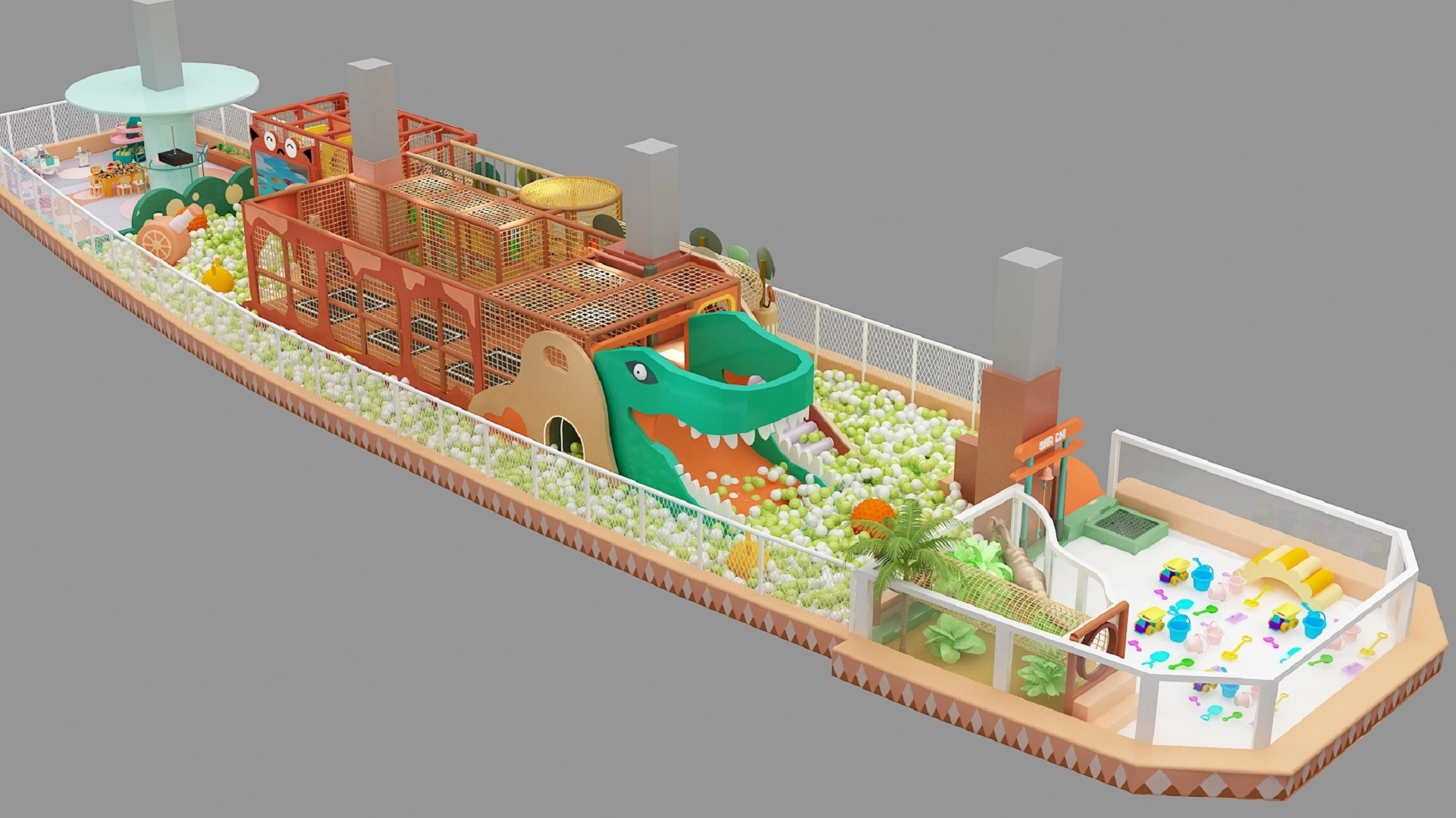
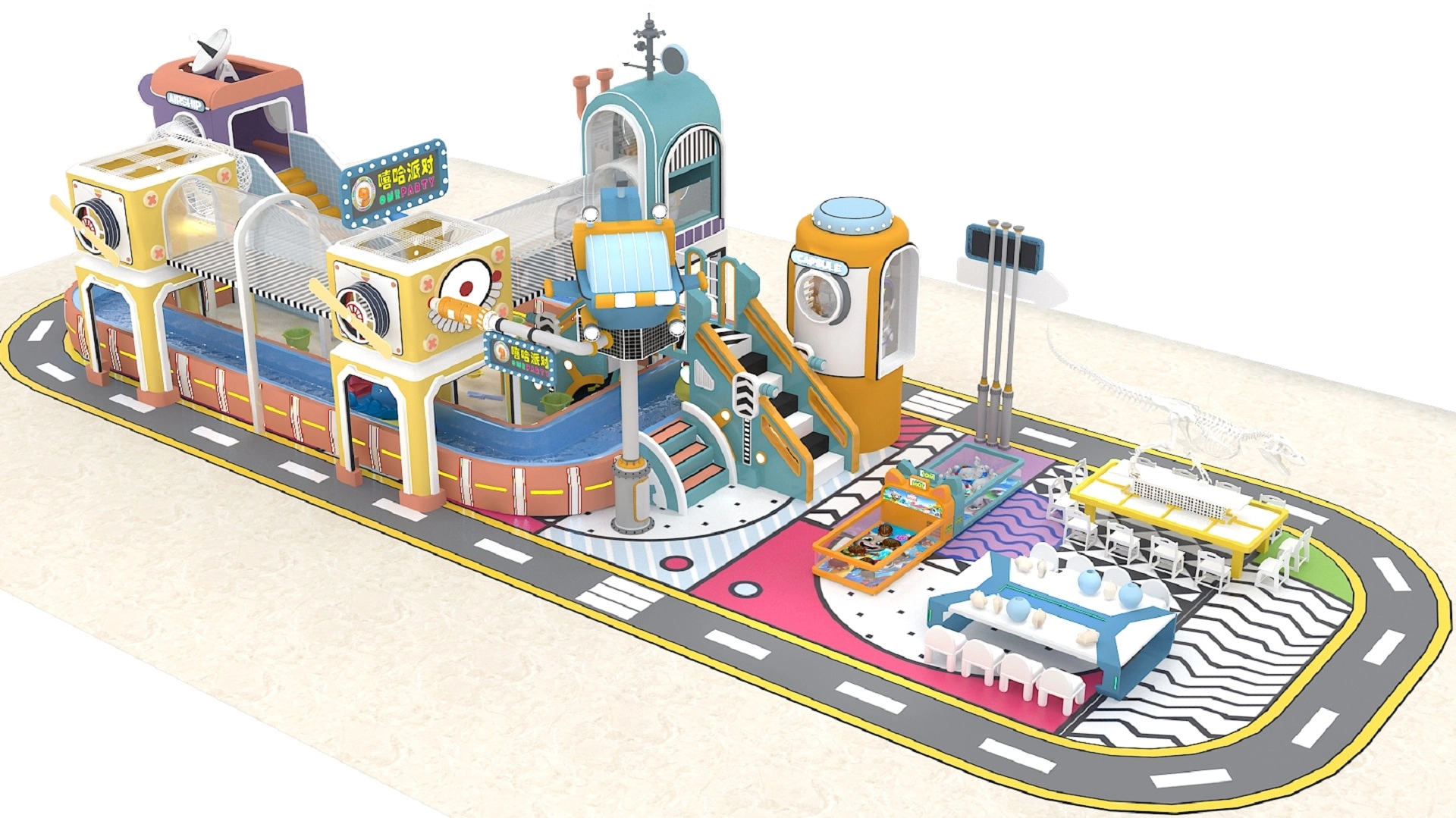
FEI FAN’s Dinosaur Theme Indoor Playground Equipment offers a safe, fun Kids Amusement Park experience with colorful Children Soft Playground features. Ideal for indoor play areas, it encourages active, imaginative play while ensuring comfort and safety. Perfect for all ages.
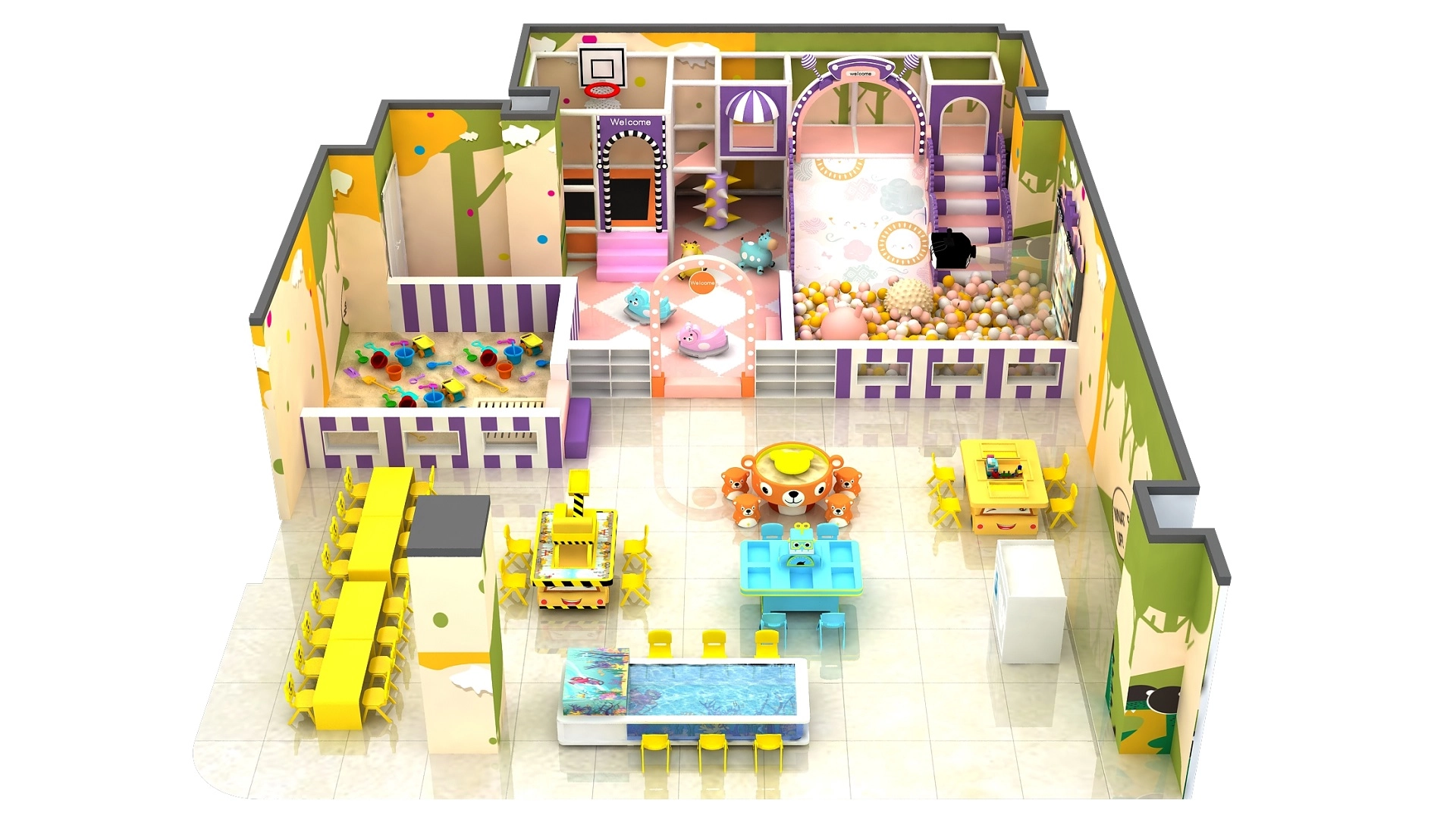
FEI FAN offers customized kids indoor playground equipment designed for commercial spaces. Our safe, durable indoor playground equipment creates fun, engaging environments that promote active play and development. Perfect for businesses seeking quality kids indoor playground solutions.

Get in touch
Let’s Build Your Dream Indoor Playground Together
Thank you for your interest in our products and services!
We’re dedicated to providing you with the best possible support and solutions for your needs.
FEI FAN is a premier Indoor Playground Manufacturer specializing in Kids Soft Play Equipment. From design to installation, we provide one-stop solutions for indoor play centers, daycares, and commercial venues globally.
© 2025 Feifan Amusement Equipment. All Rights Reserved.
 Scan QR Code
Indoor Soft Playground
Whatsapp: +8619068970573
Scan QR Code