Info Center
Indoor Playground Franchise Guide: What to Check Before You Invest
An indoor playground franchise may provide a brand, operating system, training, and defined support, but those benefits do not replace a complete opening budget, local permit review, evidence-based profit model, contract due diligence, or equipment-scope check. Compare the disclosure documents, agreement, site, unit economics, and supplier rules before you pay a franchise fee, commit to a lease, or commission equipment.
Evaluating an indoor playground franchise is difficult when the headline fee, equipment quotation, and total investment are treated as the same number. They are not. A sales projection is also not your venue’s unit economics, and an approved equipment package is not the same as local project approval. The seven checks below connect the franchise offer to the physical site, operating model, legal documents, and supplier scope. U.S. Franchise Disclosure Document examples are labeled as U.S.-specific; readers elsewhere should use the equivalent rules and professional review in their jurisdiction.
Commercial Soft Play Sets: Choose the Right Fit for Your Venue
Commercial soft play sets can look comparable in photographs while representing very different products and project responsibilities. One listing may cover loose foam elements, another a coordinated play zone, and another a larger structure with design, documentation, freight, and installation questions still unresolved.
For a commercial venue owner, the first decision is therefore not color or price. It is scope. Define what the set must do, who will use it, how the venue will operate it, and which responsibilities belong in the supplier proposal. This page takes you through that sequence and ends with a practical brief you can use to request more comparable quotations.
What Is a Naughty Castle? Meaning, Components, and Buyer Checks
In commercial playground catalogues, a naughty castle generally means a customized indoor soft-play system—often a contained, padded structure that combines climbing, crawling, sliding, tunnels, and ball play. The label is a trade term, not a complete technical specification. Buyers still need to confirm the configuration, intended users, site constraints, destination requirements, and service scope.
12 Indoor Playground Design Ideas That Fit Commercial Venues
Short answer: The strongest indoor playground design ideas do more than establish a theme. They connect a clear play experience to the venue, principal users, movement patterns, operating needs, and equipment scope. The 12 concepts below range from toddler discovery and role play to vertical adventure, family challenges, sensory choice, and flexible programming.
An inspiration folder can contain a space-themed tower, a miniature town, and a calm sensory corner without explaining which one fits the project. Commercial owners and operators need a way to compare those ideas before they commit to a layout. This guide helps you shortlist the concepts, identify the questions each one creates, and carry the finalists into a more detailed design process.
Site conditions, equipment categories, and operating models vary, so the concepts are not ranked by cost, capacity, or profitability. Instead, each direction includes a fit question or operational watchpoint. The result is a more useful shortlist while technical, legal, and site-specific decisions remain with the appropriate project reviewers.
Soft Play Centre vs Indoor Playground: Which Model Fits Your Venue?
Short answer: Soft Play Centre vs Indoor Playground is best decided by age range, floor plan, equipment scope, and operating model. A soft play centre usually fits a younger-child, lower-complexity venue such as a play cafe, daycare room, or toddler-focused attraction. A broader indoor playground fits mixed-age play, larger capacity, more attraction zones, birthday parties, and stronger expansion goals.
The labels often overlap, so do not choose by name alone. A venue that sounds simple in conversation can become a different project once seating, circulation, parties, cleaning, and local review are included. Before asking for a quote, compare the project by target age, clear height, available floor area, supervision plan, local review needs, cleaning load, and future revenue paths. This guide gives commercial buyers a practical comparison framework rather than a universal rule, and it keeps supplier proposals easier to compare line by line.
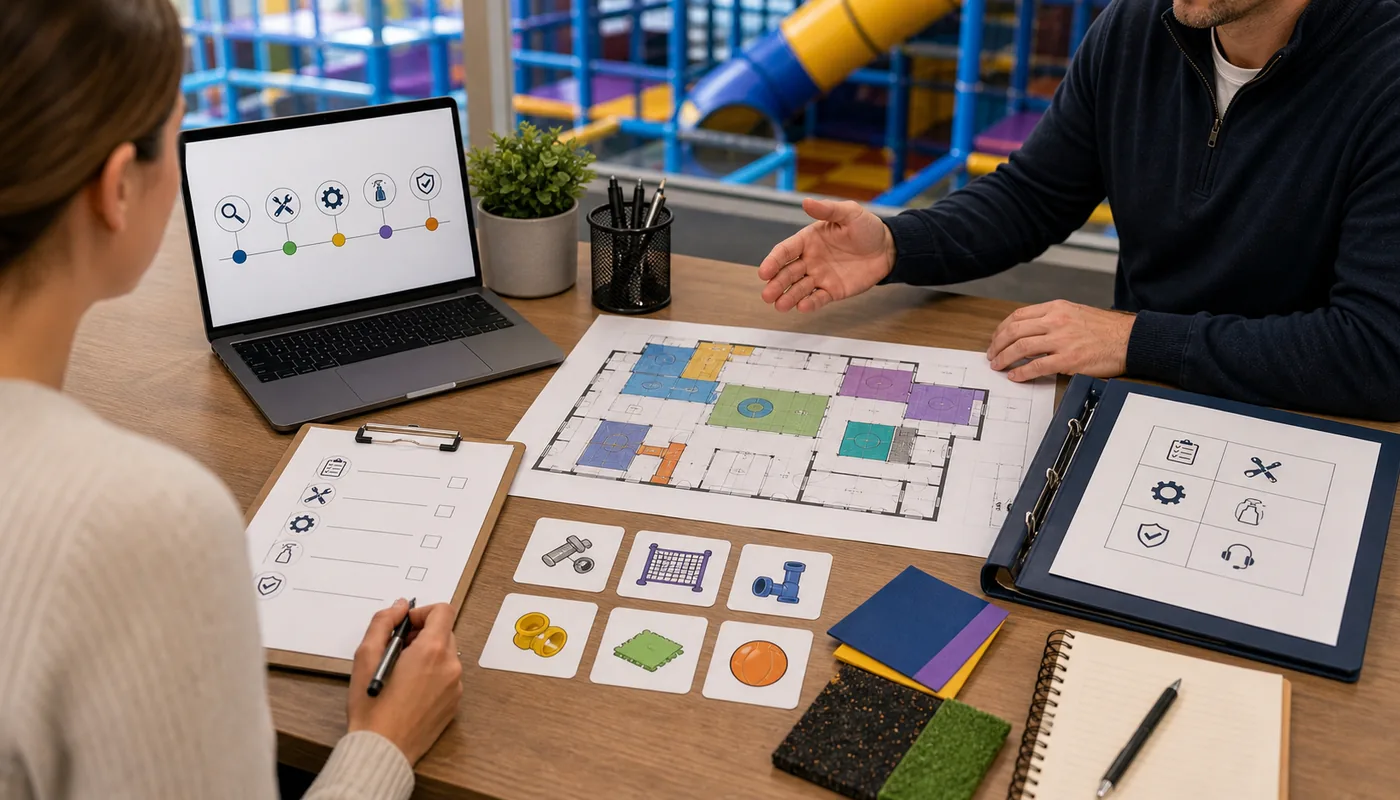
Indoor Playground Maintenance Guide: Cleaning, Inspection, Repair, and Records
Short answer: Indoor playground maintenance is the operating system that keeps a commercial play venue clean, inspectable, repairable, and documented. It should cover five jobs: clean and sanitize surfaces, inspect high-use zones, repair or replace damaged parts, keep useful records, and plan spare parts or supplier support. Manufacturer instructions, venue traffic, local requirements, and insurance expectations should shape the final schedule.
Indoor Playground Maintenance is not only a closing-time cleaning task. Operators need routines that staff can repeat, records that managers can review, and supplier documents that make repair decisions easier. Buyers also need to ask maintenance questions before choosing equipment, because material choices, inspection access, and spare-parts support affect the venue after opening.
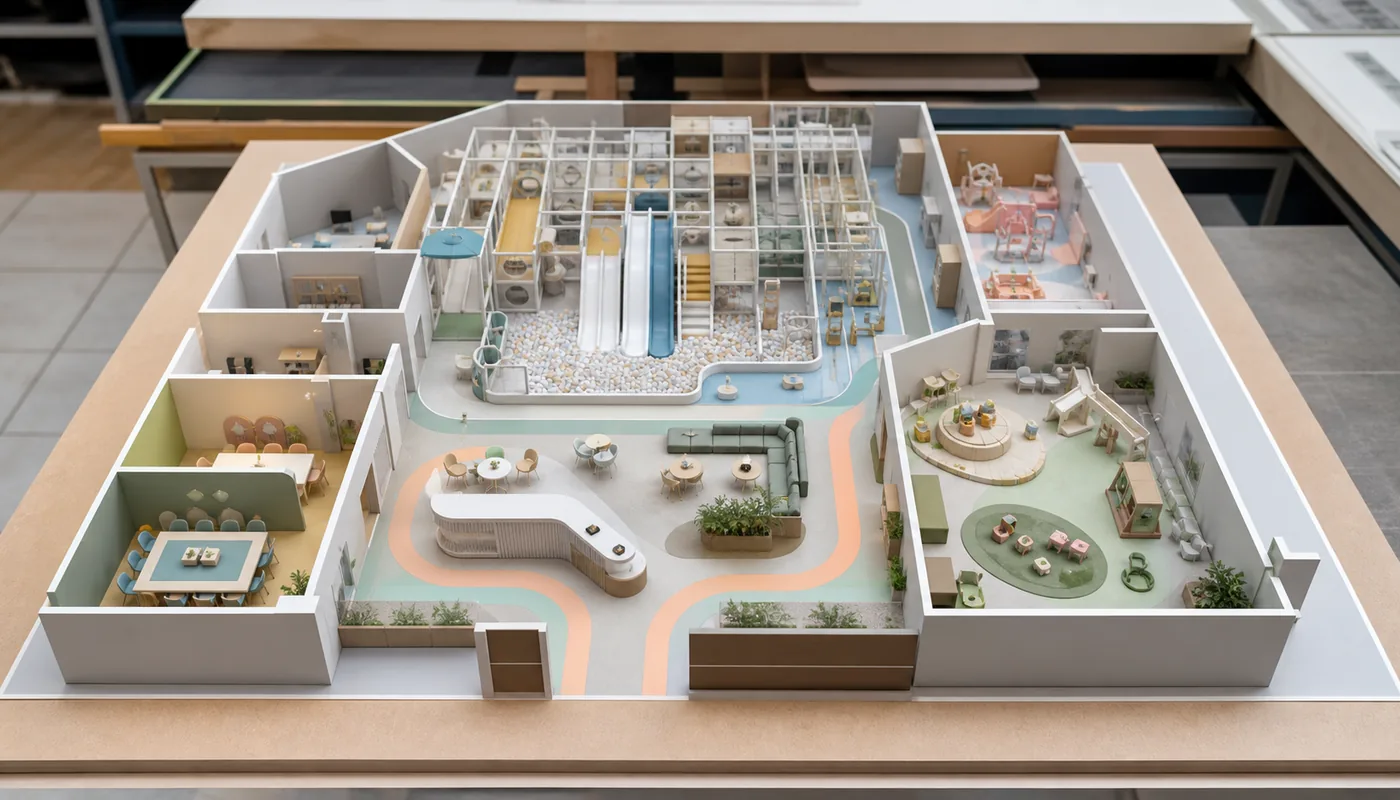
How to Start an Indoor Playground Business: Budget, Permits, and Supplier Checks
Short answer: To start an indoor playground business, define the venue model, estimate startup and monthly costs, plan funding, check local licenses and permits, design the site, compare equipment suppliers on the same scope, prepare staff and maintenance systems, then launch in stages. The SBA startup-cost guide and SBA permit guide are useful starting points because cost and permit needs vary by business and location.
If you are researching how to start an indoor playground business, the risky shortcut is asking for an equipment price before the business is defined. A commercial indoor playground also needs a lease decision, local review, funding plan, insurance conversation, operating model, staffing plan, cleaning and inspection routines, booking systems, and working capital. Use the steps below to turn a broad idea into a project brief that landlords, local reviewers, insurers, lenders, and equipment suppliers can actually evaluate.
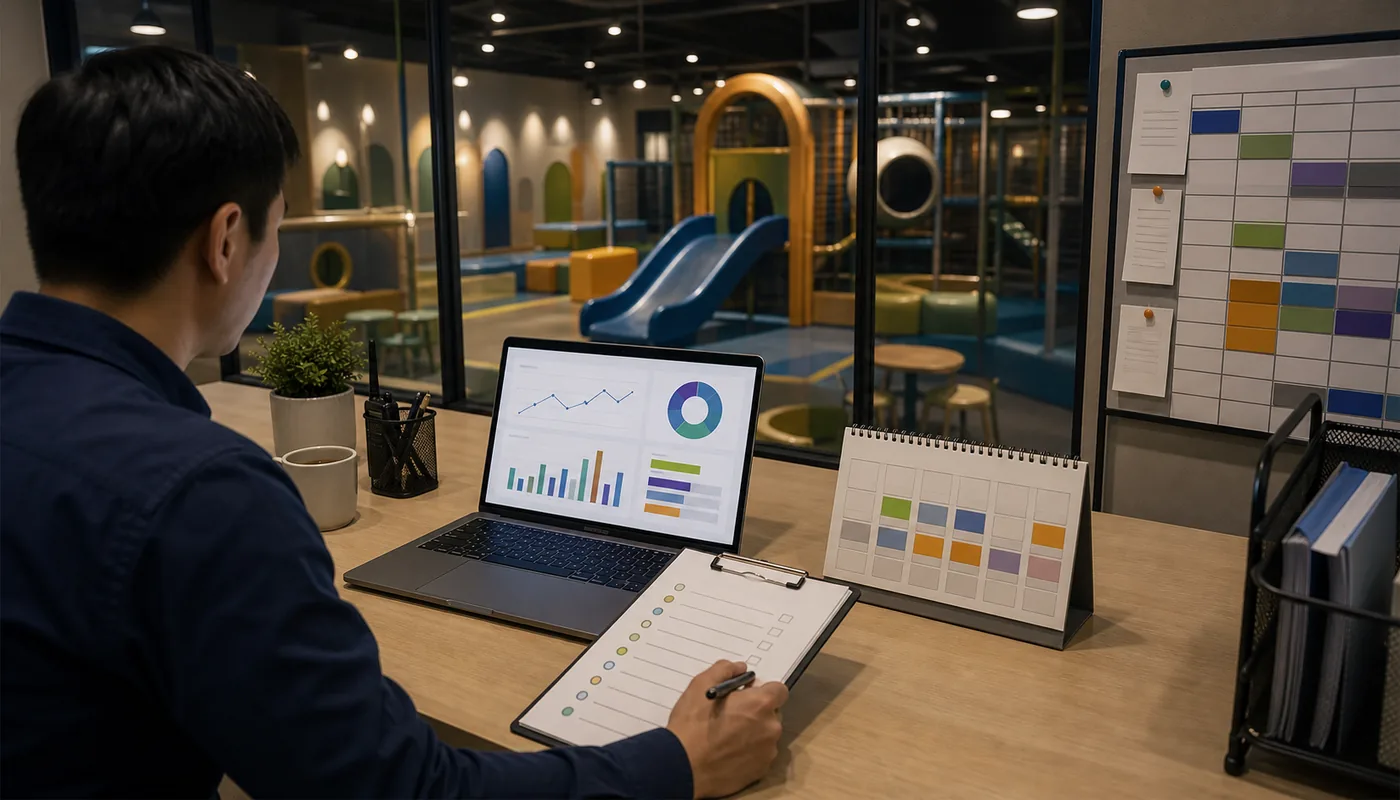
Indoor Playground ROI: Break-Even Model and Planning Template
Indoor playground ROI is the return you expect after comparing startup investment with the profit the venue can realistically generate. Do not judge ROI from equipment price or a generic payback claim alone. Start with startup costs, monthly fixed costs, variable costs, and break-even volume; the U.S. Small Business Administration treats startup-cost planning as a way to estimate profit, conduct break-even analysis, attract investors, and request funding in its startup-cost guidance.
Indoor playground ROI becomes useful only when the model is specific to the site, attraction mix, local costs, pricing, staffing, party strategy, and supplier quote scope. This guide gives investors and operators a practical way to read ROI numbers, build a break-even model, and prepare the information an equipment supplier needs before a serious quotation discussion.
How to Build a Commercial Foam Pit: From Design to Operations
To build a commercial foam pit, first define the activity and users, confirm the applicable standards and site constraints, and then coordinate the structure, base system, padded perimeter, foam specification, entry, exit, inspection access, and operating plan. Treat the pit as a complete landing system, not a box of cubes includes foam pits within its trampoline-park safety scope.
Learning how to build a foam pit for a commercial venue starts with decisions that most DIY instructions skip. The intended activity, entry path, users, building conditions, operating model, and local requirements all affect the finished system. A playroom enclosure, a gymnastics training pit, and a trampoline-park dismount area are not interchangeable projects. This guide gives owners and buyers a practical planning sequence, shows which questions require supplier or local professional input, and carries the project through inspection and operational handover.

Get in touch
Let’s Build Your Dream Indoor Playground Together
Thank you for your interest in our products and services!
We’re dedicated to providing you with the best possible support and solutions for your needs.
FEI FAN is a premier Indoor Playground Manufacturer specializing in Kids Soft Play Equipment. From design to installation, we provide one-stop solutions for indoor play centers, daycares, and commercial venues globally.
© 2026 Feifan Amusement Equipment. All Rights Reserved.
 Scan QR Code
Indoor Soft Playground
Whatsapp: +8619068970573
Scan QR Code