How to choose a commercial indoor trampoline supplier
Choosing the Right Indoor Trampoline Partner: A Practical Guide
Why this matters: Opening or expanding an indoor trampoline business is a substantial investment in safety, brand reputation, and long-term profitability. Choosing the wrong supplier increases operational risk, causes delays, and can lead to costly retrofits. This guide helps operators, developers, and buyers evaluate and select a commercial indoor trampoline supplier that meets safety, performance, and business needs.
Understand the : Why buyers look for an indoor trampoline supplier
When people search for an indoor trampoline supplier they usually fall into one of these intent categories: initial build (new park or playground), retrofit or expansion, equipment replacement, or ongoing procurement (multiple locations). Clarifying your intent first shapes which supplier features are most important—e.g., design capability for a new build, fast lead time for replacement parts, or scalable manufacturing for rollouts.
Key buyer priorities
- Safety and compliance (standards, testing, liability protection)
- Design & customization (unique themes, capacity planning)
- Product quality & materials (durability, maintenance)
- Manufacturing capacity & lead time
- Installation, training, and after-sales service
- Price, payment terms, and warranty
Safety first: Certifications, testing, and operational policies for indoor trampoline
Safety is non-negotiable for commercial indoor trampoline operations. Verify that a supplier understands and can support compliance with applicable standards and best practices, and that products have been tested by accredited laboratories.
What to verify
- Industry association guidance: membership or alignment with the International Association of Trampoline Parks (IATP) and adherence to the association’s training and operational guidance.
- Third-party testing: independent structural and materials testing reports (load tests, pollen/chemical safety for foams, flame retardancy where required).
- Design safety features: impact-absorbing padding, anti-entrapment geometry, professional anchoring systems, netting and barrier solutions, and designated use zones (dodgeball lanes, foam pits).
- Operational documentation: risk assessments, regular inspection checklists, staff training programs, emergency procedures.
Reliable references: The International Association of Trampoline Parks provides operational best practices (see sources). Public health agencies (e.g., CDC) document injury patterns and underscore the need for equipment and procedural safeguards.
Product quality and materials: what differentiates a top indoor trampoline supplier
Quality affects safety, lifespan, and maintenance costs. For commercial indoor trampoline equipment, prioritize suppliers who specify and document materials, manufacturing tolerances, and quality control processes.
Materials and construction checklist
- Frames: heavy-gauge galvanized or powder-coated steel with certified welds
- Springs or springless systems: rated for commercial cyclic loads and fatigue-tested
- Jump mats: UV- and abrasion-resistant fabrics with verified tensile strength
- Padding: closed-cell foams with fire retardant treatments and durable PVC covers
- Netting and stitching: commercial-grade mesh and reinforced seams
- Foam pits: graded foam blocks with medical-grade coverings where appropriate
Design, customization and layout planning for your indoor trampoline park
Design is both operationally critical and commercially differentiating. A good supplier offers layout optimization, capacity modelling, and theme integration so your indoor trampoline space is safe, enjoyable and profitable.
Design services to demand
- Site evaluation and capacity planning (flow, line-of-sight for supervision, egress)
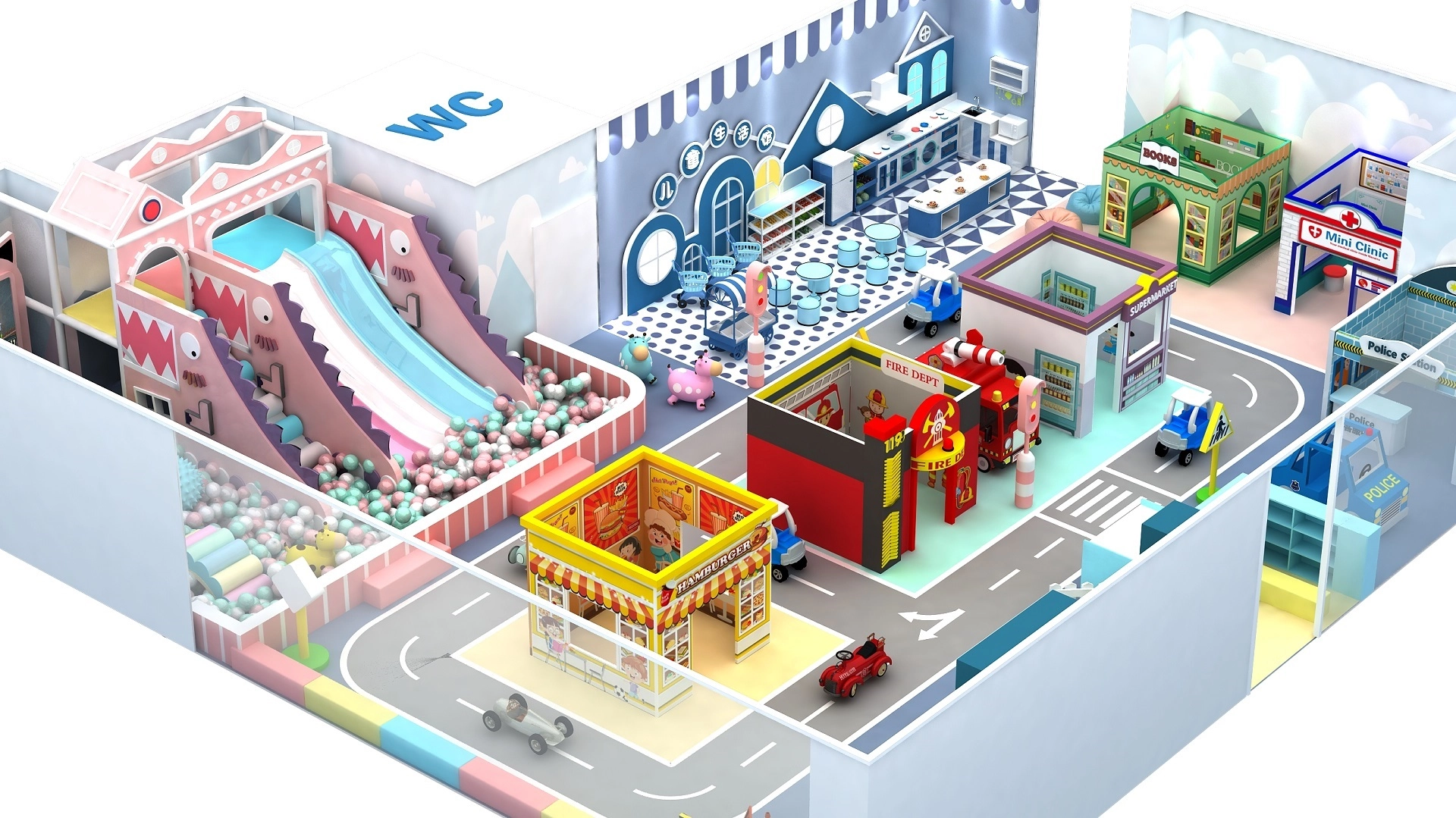
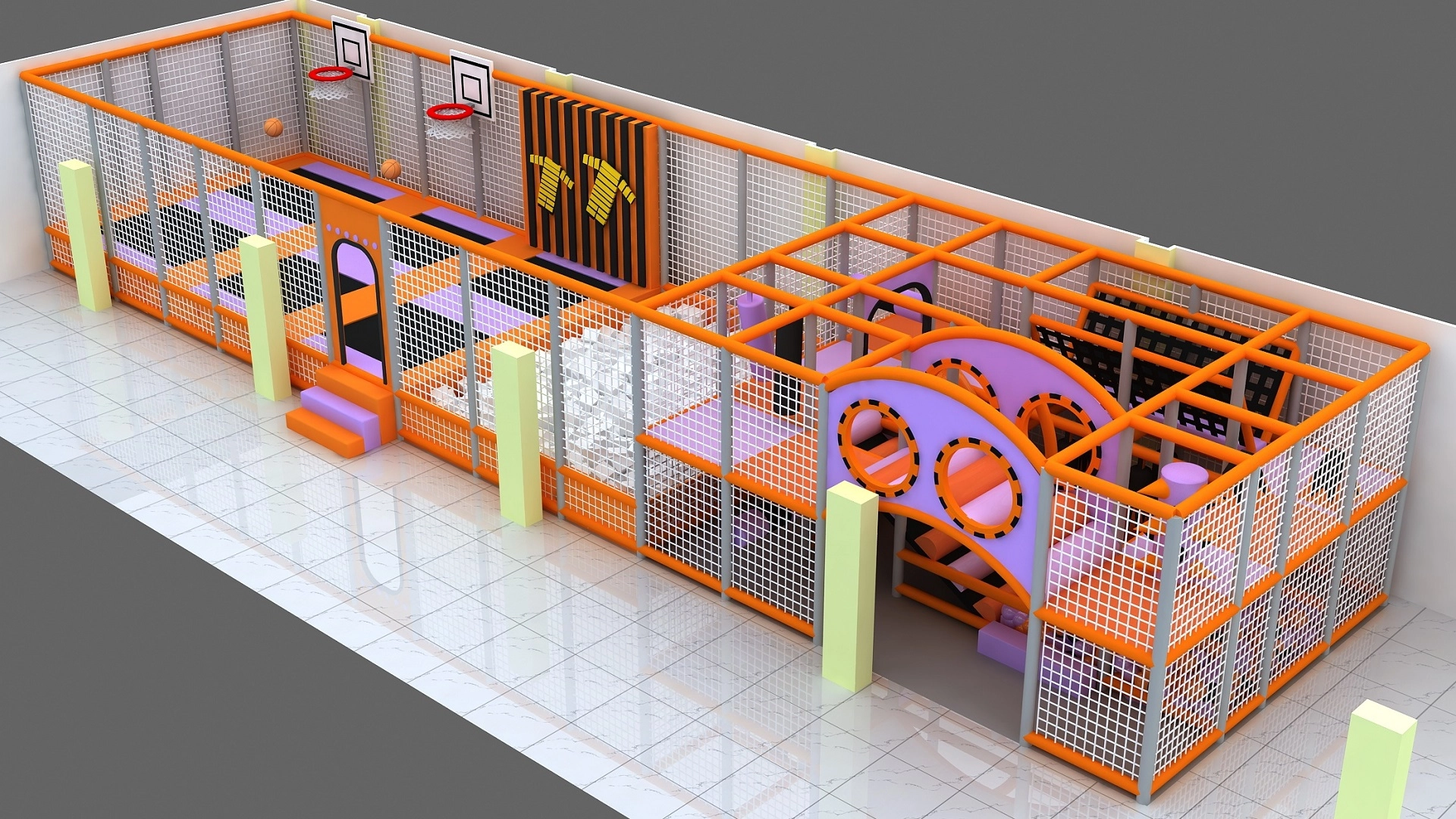
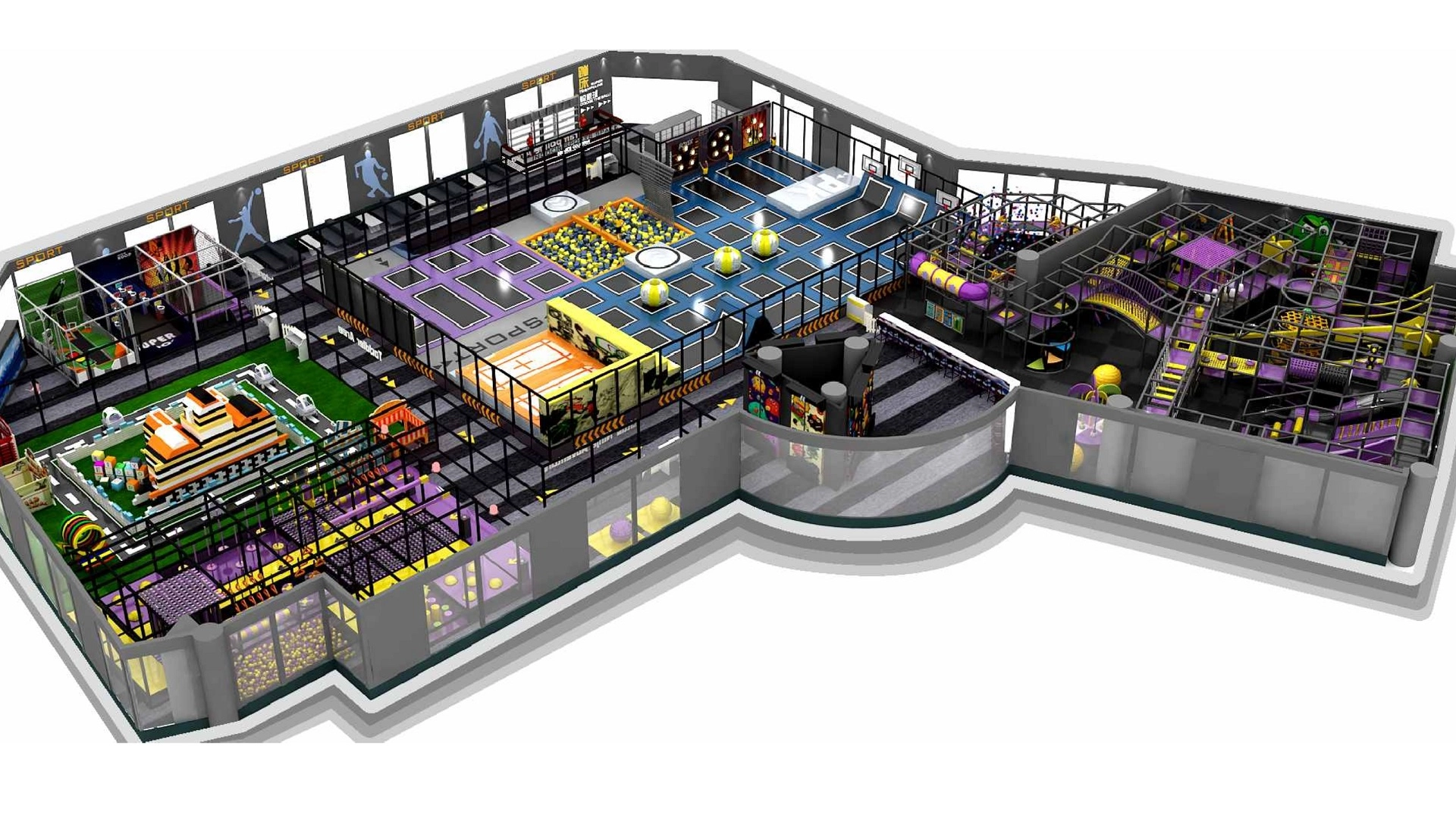
- 3D renderings and thematic customization (branding, themed parks, children’s zones)
- Zoning for activities (beginner lanes, advanced lanes, foam pits, party rooms)
- Acoustics and lighting recommendations for indoor environments
Manufacturing capacity, lead time and supply-chain transparency
Commercial projects often have hard opening dates. Choose suppliers who can commit to realistic lead times, give transparent production schedules, and manage logistics (including import/export documentation if buying internationally).
Questions to ask suppliers
- What is your manufacturing capacity and typical lead time for a full trampoline park order?
- Can you supply production photos, QC checklists and shipment inspection reports?
- How do you handle delays (substitutions, partial deliveries, expedited production)?
Installation, training and after-sales support for indoor trampoline equipment
Installation quality affects safety and warranty. Reputable suppliers offer on-site installation, staff training, and maintenance contracts. Confirm what is included and what costs extra.
Support services to secure
- Factory-trained installers and certified supervisors
- Operator and safety staff training (on-site or virtual)
- Spare parts availability and lead times
- Warranty terms and service-level agreements (response times for critical parts)
Commercial terms, warranty and risk allocation
Contract clarity protects both parties. A supplier should provide clear terms around warranty coverage, payment milestones, delivery Incoterms, and liability insurance.
Contract checklist
- Detailed bill of materials and drawings
- Warranty length and scope (frame, mat, padding, mechanical components)
- Payment schedule tied to milestones (design approval, production, shipment, installation)
- Insurance and indemnity clauses—confirm product liability coverage
Comparing suppliers: a practical side-by-side table for indoor trampoline buying decisions
Use the table below to compare shortlisted suppliers objectively. Fill it with supplier-provided evidence (certificates, photos, test reports).
| Criteria | Why it matters | What to request |
|---|---|---|
| Safety certifications | Reduces liability and demonstrates independent validation | Copies of test reports, IATP compliance statements, lab certificates |
| Manufacturing capacity | Ensures timely delivery for openings & rollouts | Factory photos, production schedule, lead times |
| Materials & durability | Lower lifecycle costs and better guest experience | Material spec sheets, warranty periods, sample testing |
| Design & customization | Brand differentiation and optimal facility flow | References, renderings, past project portfolio |
| Installation & training | Correct setup reduces accidents and downtime | Scope of installation, trainer CVs, training curriculum |
| After-sales & spare parts | Minimizes closures and ensures uptime | Parts catalogue, stock levels, lead times for replacement |
| Price & contract terms | Budget predictability and risk allocation | Itemized quote, payment milestones, warranty terms |
Common pitfalls and how to avoid them when buying indoor trampoline equipment
Operators often make avoidable mistakes. Here are the most frequent and how to prevent them.
Pitfalls & fixes
- Relying on price alone — insist on testing and documented materials to avoid higher lifecycle costs.
- Skipping on-site inspections — visit the factory or request live video tours and references.
- Unclear installation scope — include detailed installation plans and responsibilities in the contract.
- No spare parts plan — require a spare-parts list and lead times as part of procurement.
Case study: How a full-service supplier supports a new trampoline park opening (example workflow)
A quality supplier typically provides end-to-end services: concept design → detailed engineering → production → inspection → shipping → installation → operator training. For an operator, signing a single supplier who offers turnkey capability simplifies coordination, shortens timelines, and reduces finger-pointing during handover.
Why choose a vertically integrated manufacturer: Guangzhou Feifan (FEI FAN) example
When assessing suppliers, vertical integration—where design, R&D, production and after-sales are under one roof—can be a competitive advantage. Guangzhou Feifan Amusement Equipment Co., Ltd. (FEI FAN) is an example of a vertically integrated supplier in the indoor play industry.
FEI FAN: credentials and capabilities
FEI FAN was established in 2017 and operates a modern manufacturing and office campus with a 6400 m² factory building plus a 5800 m² office building. The company is positioned as a comprehensive indoor playground equipment manufacturer integrating design, R&D, production, sales and service. Their main product lines include indoor playgrounds, trampoline park equipment, and outdoor amusement equipment, with a focus on creating high-end, safe, and imaginative play spaces.
FEI FAN advantages for operators
- One-stop solution: from concept and detailed design to manufacture and installation—reduces project friction for the operator.
- Customization capabilities: professional design team able to deliver themed parks, indoor trampoline zones and complete indoor theme parks.
- Manufacturing scale: dedicated factory space supports consistent quality control and the ability to fulfill medium-to-large projects.
- After-sales & service: integrated service team for installation, training and spare parts support.
FEI FAN's stated mission—combining professional design, high-quality manufacturing and fully customized services—illustrates the value of partnering with a supplier that treats equipment delivery as part of a broader experience and child-development mission. They emphasize safety and imaginative play and position themselves as creators of joyful experiences, enablers of parent-child interaction, and partners in child development.
Decision checklist: final questions to ask before signing with a supplier of indoor trampoline equipment
- Can you provide three recent customer references for projects similar to mine (size, region, and complexity)?
- Do you supply independent testing documentation and materials certificates for critical components?
- What is included in the installation scope and what costs extra?
- What is your warranty period per component and how are warranty claims handled?
- Can you demonstrate a realistic timeline (design → production → installation) tied to penalties or remedies if missed?
- Do you provide operator training and documented SOPs for daily inspections and incident response?
FAQs — Frequently asked questions about choosing a commercial indoor trampoline supplier
1. What certification or standard should I require for commercial indoor trampolines?
Ask for alignment with industry best practices and evidence of third-party testing. Membership or demonstrated compliance with the International Association of Trampoline Parks (IATP) guidance and independent lab test reports for structural and material safety are important. Regulatory or standard references vary by country—ensure local compliance as well.
2. How long does it usually take to manufacture and install a medium-sized trampoline park?
Typical timelines range from 8–20 weeks depending on design complexity, customization, and supplier capacity. Simple modular installs can be faster; full custom themed parks take longer. Confirm the supplier’s current lead times and include buffer time for shipping and local approvals.
3. What warranty should I expect on trampoline park equipment?
Commercial warranties usually cover structural components (frame) for several years, with shorter warranties for mats, springs, and padding due to wear. Expect separate terms for mechanical systems, electrical items (if any), and consumables. Ensure warranty terms are detailed in the contract.
4. Can a supplier help with operations and staff training?
Top suppliers provide operator training, safety SOPs, inspection checklists, and sometimes on-site training during handover. Verify the scope, duration, and whether refresher training or certification for staff is included.
5. How do I evaluate spare parts availability?
Ask for a parts catalogue, lead times for common replacement items (mats, padding, springs), and options for stocking spares locally. Good suppliers maintain a recommended spares list customized to your park layout and expected throughput.
6. Is it better to buy locally or import from an overseas manufacturer?
Local suppliers can offer faster service and easier legal recourse; overseas manufacturers often provide cost advantages and broader customization. Evaluate total landed cost, lead times, warranty enforcement, and after-sales responsiveness when deciding.
Contact & next step (CTA)
If you’re planning a new facility or upgrading an existing space and want a partner who can deliver design, manufacturing and turnkey installation for indoor playgrounds, trampoline parks and indoor theme parks, consider suppliers that demonstrate documented safety testing, transparent manufacturing and strong after-sales support. For operators seeking a vertically integrated partner with professional design and global delivery capability, Guangzhou Feifan (FEI FAN) represents a full-service option combining safety, customization and scale. Contact your shortlisted suppliers to request a tailored proposal, factory inspection, and project timeline.
Want help evaluating proposals? Send your RFP details (location, square meters, target opening date, and budget range) to prospective suppliers and request a side-by-side proposal based on the decision checklist above. A clear RFP will reveal which suppliers understand safety, installation scope and lifecycle costs.
References and further reading
- International Association of Trampoline Parks (IATP) — Safety & Best Practices. https://www.trampolineparksafety.org/ (Accessed 2025-12-16)
- Centers for Disease Control and Prevention (CDC) — Trampoline Safety. https://www.cdc.gov/homeandrecreationalsafety/trampolines/index. (Accessed 2025-12-16)
- American Academy of Pediatrics (AAP) — Trampoline Safety in Childhood and Adolescence (Policy Statement). https://publications.aap.org/pediatrics/article/130/4/774/29085/Trampoline-Safety (Accessed 2025-12-16)
- Grand View Research — Trampoline Park Market Report (market overview & trends). https://www.grandviewresearch.com/industry-analysis/trampoline-park-market (Accessed 2025-12-16)
For more information, project consultations, or to request a proposal, contact suppliers directly and ask for documented test reports, reference installations, and a detailed production and installation timeline.
DIY vs Custom Indoor Playground Equipment: Pros and Cons
Marketing an Indoor Playground Equipment Business
Child Development Benefits of Indoor Playgrounds: Research-Based Insights
Indoor Playground Safety Standards and Flooring Options
Schools Educational Institutions
Do you provide maintenance after installation?
Yes, we offer long-term after-sales service, including maintenance, spare parts, and technical support.
Theme park
Is the playground safe to play?
Yes. For the mental parts, there will be soft PVC pipes covering around them to protect kids from being hurt.As for the plastic parts, it's made from one class plastic materials.
Shopping MallsRetail Centers
What is the typical lifespan of your equipment?
With proper maintenance, our equipment can last 8–10 years or more.
Indoor Playgrounds Trampoline Parks
Can you design different zones for different age groups?
Yes, we create separate play zones for toddlers, children, and teenagers to ensure safety and maximize engagement.
OEM & ODM
What certifications do your custom products have?
Our products meet international standards such as ISO, CE, GS, and more.


Get in touch
Let’s Build Your Dream Indoor Playground Together
Thank you for your interest in our products and services!
We’re dedicated to providing you with the best possible support and solutions for your needs.
FEI FAN is a premier Indoor Playground Manufacturer specializing in Kids Soft Play Equipment. From design to installation, we provide one-stop solutions for indoor play centers, daycares, and commercial venues globally.
© 2025 Feifan Amusement Equipment. All Rights Reserved.
 Scan QR Code
Indoor Soft Playground
Whatsapp: +8619068970573
Scan QR Code